
According to a 2025 study that analyzed 1,051 English-language publications from the Scopus database, frequently occurring keywords such as ChatGPT, AI, and academic integrity reflect growing interest in AI tools and ethical issues in academic writing. With researchers publishing millions of papers annually and citation analysis becoming increasingly complex, it's high time we use these research tools to navigate the scientific literature more effectively.
In this scite review, we'll explore everything you need to know about this innovative platform designed to help researchers find relevant papers and evaluate academic research through smart citation analysis.
Here is what we are going to cover:
- What is scite and its capabilities
- Key features that make scite.ai different from traditional search tools
- Pricing structure and value proposition
- Drawbacks and limitations
- Customer reviews from real users
- Five alternatives including Elephas for Mac users
- Detailed comparison across pricing and features
- Which AI-powered research assistant is the best choice for different needs
By the end of this scite.ai review, you'll understand whether this citation tool fits your research workflow and how it compares to other ai tools for academic research, helping you make an informed decision about your literature review investment.
Let's get into it.
What is Scite?
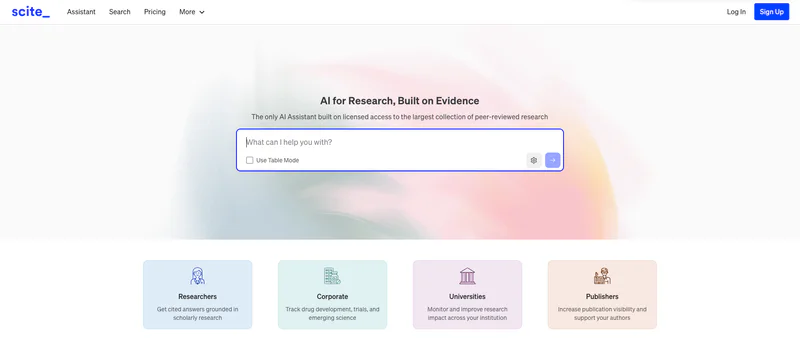
Scite is an ai-powered citation analysis platform that helps researchers find and evaluate scientific literature through contextual citation information. Unlike traditional research tools that only count citations, scite provides deeper insights by showing how publications cite each other and whether they support or contradict specific claims.
The platform uses machine learning to classify citations and extract exact statements from citing papers. This allows researchers to assess reliability more effectively than basic citation counts. Scite indexes millions of citation statements from journals, preprint servers, and academic sources, making it an essential academic research tool for anyone conducting a literature review or deep research.
Key Points:
- Primary function: Citation analysis and scientific literature evaluation
- Target users: Researchers, students, librarians, academic institutions
- Main differentiator: Smart citation classification showing support or contradict evidence
- Basic how it works: AI analyzes citation context to classify and evaluate research
- Platform availability: Web browser, browser extension, API access
Drawbacks of Scite:
- Learning curve with the interface (ux) and advanced features requiring time to understand compared to simpler ai research tools
- Pricing barriers for independent researchers without institutional support to get access to full functionality
- Coverage gaps in niche areas or recent preprint publications with limited smart citation data
- AI hallucinations reported by users including fabricated quotes and nonexistent sources complete with doi links
- Limited integration with broader genai workflows unlike ChatGPT, Gemini, or gpt-based platforms for general research questions
Scite Customer Reviews
"The assistant saves so much time during literature reviews" - Matt, Trustpilot
"The amount of hallucinations that manifested as fabricated quotes was OVERWHELMING" - Alex Sokolovsky, Trustpilot
Quick Overview Table
Feature | Details |
|---|---|
Best For | Academic researchers needing citation analysis |
Pricing Starts At | $20/month (Individual plan) |
Free Plan | Yes (limited searches and basic features) |
Platform | Web, Browser Extension, API |
Company | Scite, founded 2018 |
Our Rating | 4.0/5.0 |
Top 6 Alternatives to Scite in 2026
1. Elephas

Elephas is an AI-powered personal knowledge assistant exclusively designed for Mac, iPhone, and iPad users who need intelligent document analysis and AI writing assistance for research papers and academic work. The platform changes documents, PDFs, and notes into a searchable AI brain that works completely offline for confidential research.
Unlike cloud-based AI research tools like Scite, Elephas processes everything locally on your device using inbuilt local LLM models, ensuring sensitive research information never leaves your Mac. The chat assistant integrates with all macOS applications while supporting multiple AI models, including GPT-4 and Claude, for literature review and citation management tasks.
Key Features:
- Super Brain: Creates your personal knowledge base by learning from PDFs, Word documents, research papers, and over 20 file formats. Generate unlimited searchable brains for different research projects, providing instant answers with source citations from your academic sources without sending data to cloud servers.
- Offline AI Capabilities: Run Elephas completely offline with local data storage using on-device AI models through integration with reference manager tools like Zotero. This ensures complete privacy and control over sensitive research materials while getting ai-powered assistance across all macOS applications for your workflow.
- Super Command Feature: Works across any Mac application to perform text operations like summarizing research papers, grammar fixes, rewrites, and translation. Create custom commands based on keywords for frequently used research tasks, making the research process faster when analyzing academic community discussions.
- Multi-Device Sync: Seamlessly sync data across Mac, iPhone, and iPad using the same Apple account. Access your knowledge bases and AI writing assistance on whichever device you're using without manual file transfers for relevant research on the go.
- Multiple AI Models: Choose between OpenAI, Claude, Gemini, Perplexity, and other LLMs, or use your own API keys for maximum flexibility. Switch between different AI providers based on your specific academic research needs and preferences for contextual analysis.
Pricing: $9.99/month
Why is it better than Scite
- Works across all Mac applications instead of requiring a dedicated web platform, providing AI assistance everywhere you handle research matters
- Offline AI capabilities protect confidential research information without sending anything to cloud servers unlike scite.ai
- Super Brain learns from your specific research documents rather than providing generic citation analysis
- Native macOS integration offers better privacy for researchers requiring strict data protection standards
- One-time setup creates unlimited knowledge bases for different projects versus scite's search-based interface
Customer Reviews
"Elephas fits beautifully into my writing routine! I haven't come across any other app that offers such a great level of Mac integration along with a wide variety of AI tools and features" - User, Capterra
"The ability to manage documents, retrieve data accurately, and flexibility to handle various file types to its offline mode for privacy makes this tool invaluable for my workflow." - Executive Director, Capterra
2. Semantic Scholar

Semantic Scholar is a free AI-powered academic search engine developed by the Allen Institute for AI that helps researchers discover relevant research efficiently through semantic understanding. The platform uses AI to understand the meaning of research papers rather than just matching keywords like traditional search tools.
With access to over 214 million papers across scientific literature and arts and humanities, Semantic Scholar provides AI-generated summaries and influential citation metrics. The platform excels at helping researchers find relevant papers through semantic search, making it a powerful alternative to scite for paper discovery without subscription costs.
Key Features:
- AI-Generated Summaries: Automatically creates paper summaries and key takeaways for quick evaluation, helping researchers understand main findings without reading full papers. The AI extracts methodology, results, and conclusions to provide contextual overview of research contributions.
- Influential Citations Feature: Highlights the most impactful references in a paper, going beyond simple citation counts to identify which sources truly shaped the research. This helps researchers evaluate the academic community's response and find papers that defined research directions.
- Research Feeds and Alerts: Create personalized feeds based on keywords and topics to stay updated on new publications. Email alert notifications keep you informed about relevant papers in your field, streamlining the literature review process for ongoing research.
- Citation Velocity Metrics: Shows how quickly papers are gaining attention in the academic community through citation trends over time. This innovative platform feature helps identify emerging impactful research and trending topics before they become widely recognized.
- Free Access to 214M+ Papers: Completely free search tool providing access to electronic resources across all scientific fields without subscription barriers. The platform democratizes access to academic sources for researchers regardless of budget constraints.
Pricing: Free
Why is it better than Scite
- Completely free versus scite's $20/month Individual plan, making research accessible to all scholars
- Superior paper discovery through semantic search compared to scite's citation-focused approach
- AI-generated summaries provide quick insights without requiring citation analysis
- Larger database with 214 million papers versus scite's focused citation database
- Better for finding relevant papers when starting new research versus evaluating existing citations
Customer Reviews
"Semantic Scholar has become my go-to for finding papers. The AI-generated summaries save me so much time, and the citation features are sophisticated enough for serious research. Can't believe it's completely free." - User, Reddit
"The influential citations feature is helpful but sometimes misses important references from my field. The AI summaries occasionally oversimplify complex research." - User feedback from academic review sites
3. Consensus

Consensus is an AI search engine that specializes in answering research questions by synthesizing findings across multiple papers. The platform excels at providing evidence-based answers to specific questions, making the research process faster for researchers who want quick summary insights without reading dozens of studies.
Using scite is an ai-powered approach works well for citation analysis, but Consensus focuses on extracting direct answers from the scientific literature. The tool analyzes research papers to show consensus views, methodology details, and strength of evidence through its verifiable AI chat interface.
Key Features:
- Natural Language Research Questions: Ask questions in plain language and receive synthesized answers from multiple papers with supporting citations. The AI understands research context and provides relevant research findings based on evidence from academic sources across disciplines.
- Yes/No/Possibly Consensus Indicators: Shows the consensus view across studies on specific questions, helping researchers quickly understand if there's agreement in the literature. This feature is designed to help researchers evaluate the strength of evidence for hypotheses and claims.
- Study Snapshots with Methodology: Provides quick summaries of sample size, study design, and key findings for each cited paper. Researchers can evaluate the usefulness and quality of sources without reading full papers during the literature review process.
- Synthesis Feature: Combines findings from multiple research papers into coherent overviews, acting like a librarian who has reviewed extensive literature. The AI extracts patterns and themes to provide comprehensive understanding of research topics efficiently.
- Evidence Strength Meter: Displays the level of agreement and strength of evidence in the literature based on citation analysis and study quality. This helps researchers find and evaluate which claims have strong support and which remain controversial.
Pricing: $8.99/month
Why is it better than Scite
- Answers specific research questions directly versus scite's citation-focused approach
- Lower pricing at $8.99/month compared to scite's $20/month for researchers on budgets
- Better for hypothesis testing and evidence gathering than citation analysis
- More intuitive natural language interface for researchers who want immediate answers
- Stronger synthesis capabilities across multiple studies versus individual citation examination
Customer Reviews
"Consensus has changed how I do literature reviews. Instead of spending hours reading papers to find out if there's support for a specific hypothesis, I can ask the question and see what the research says in minutes. The synthesis feature is particularly helpful for getting an overview of a topic quickly." - User, Reddit
"The consensus indicators are useful but sometimes oversimplify nuanced research. Not all papers carry equal weight in determining consensus, and the AI doesn't always account for study quality differences." - User feedback from review platforms
4. Elicit

Elicit is an AI research assistant that automates time-consuming research tasks like summarizing research papers, extracting data, and synthesizing findings across studies. The platform is specifically designed to streamline the literature review workflow for researchers conducting systematic reviews and meta-analyses using ai tools.
The tool helps researchers find relevant papers even without exact keywords through semantic understanding. Elicit's custom data extraction and comparison features make it more practical for analyzing content than scite's citation focus, especially for evidence synthesis projects requiring detailed analysis.
Key Features:
- Automated Paper Summaries: Extracts key methods, findings, and limitations from research papers automatically, providing contextual understanding without manual reading. The AI identifies important information and structures it for easy review during the research process.
- Custom Data Extraction: Pull specific information from multiple papers simultaneously based on keywords and research questions you define. Create extraction templates to analyze findings across studies systematically, making meta-analyses and systematic reviews more efficient than manual approaches.
- Semantic Search Capabilities: Finds papers understanding semantic meaning rather than requiring exact keyword matches, helping researchers discover relevant research they might miss with traditional search tools. This addresses limitations of keyword-based preprint servers and databases.
- Comparison Tables: Analyze findings across multiple studies side-by-side with automated table generation. The AI organizes extracted data to help researchers identify patterns, contradictions, and gaps in the literature for comprehensive literature review sections.
- Task-Specific Workflows: Specialized workflows for systematic reviews, meta-analyses, and evidence synthesis designed to help academic research tasks. The platform provides step-by-step guidance for complex research methodologies requiring structured approaches.
Pricing: $10/month
Why is it better than Scite
- Automates literature review mechanics versus scite's manual citation analysis approach
- Extracts and synthesizes actual paper content rather than just examining citation relationships
- Superior for systematic reviews requiring custom data extraction from many papers
- Better comparison capabilities across studies for meta-analyses and evidence synthesis
- More practical for writing literature review sections with organized extracted information
Customer Reviews
"Elicit has cut my literature review time in half. The ability to extract specific data points from dozens of papers simultaneously is incredible. I used to spend days creating comparison tables; now Elicit does it in minutes with surprising accuracy." - User, Product Hunt
"The AI sometimes struggles with complex methodology sections and specialized terminology in my field. Data extraction accuracy varies depending on how papers structure their results sections." - User feedback from review platforms
5. ResearchRabbit

ResearchRabbit is a free AI-powered literature discovery tool that helps researchers build collections of papers and discover new related research through personalized recommendations. Often called the Spotify for academic research, it visualizes connections between research areas, authors, and ideas for intuitive exploration.
The platform excels at personalized discovery based on your existing research interests. Unlike using scite.ai for citation analysis, ResearchRabbit focuses on helping you explore the broader research landscape and identify influential papers through network visualization and recommendation algorithms.
Key Features:
- Smart Paper Recommendations: Suggests new papers based on your existing collections and reading history, learning your research interests over time. The AI identifies patterns in what you save to recommend highly relevant research you might have missed through traditional searching.
- Visual Network Maps: Displays connections between research areas, authors, and papers through interactive visualizations. See how different studies relate to each other and identify clusters of related work for understanding research workflows and developments.
- Author Network Analysis: Reveals collaboration patterns and influential researchers in your field through author connection maps. This helps identify key contributors to track and potential collaborators for your research based on their work and network position.
- Timeline View: Shows the evolution of research topics over time, helping you understand how fields developed and identify seminal versus recent papers. This temporal perspective aids in writing comprehensive literature reviews that classify research chronologically.
- Collection Sharing: Collaborate with colleagues by sharing research collections and discoveries. Teams can build shared knowledge bases for research projects, streamlining coordination and ensuring everyone accesses relevant papers for the academic community.
Pricing: Free
Why is it better than Scite
- Completely free forever versus scite's paid subscription model for full features
- Superior discovery of new research through personalized recommendations
- Visual exploration more intuitive than text-based citation analysis for understanding fields
- Better for exploring unfamiliar research areas and identifying key papers
- Collaborative features enable team research workflows beyond individual citation checking
Customer Reviews
"ResearchRabbit is amazing for getting oriented in a new research area. The visual graphs help me understand the field's structure much faster than reading papers linearly. I can immediately see which papers are central to a topic and which are more peripheral." - User, Reddit
"The recommendations are generally good but sometimes suggest papers that are only tangentially related to my actual research focus. The free tier is excellent but I wish there were more advanced filtering options." - User feedback from review platforms
6. Connected Papers

Connected Papers creates visual graphs of research papers based on their relationships, helping researchers discover relevant papers through intuitive network visualization. The tool maps the research landscape around specific papers using co-citation and bibliographic coupling analysis for exploration.
The platform excels at visual literature exploration compared to scite's text-based citation analysis. Connected Papers helps researchers identify seminal works, trace research lineage, and discover related studies through graph-based navigation designed for intuitive discovery rather than keyword searching.
Key Features:
- Visual Network Graphs: Shows relationships between papers based on co-citations and bibliographic coupling through interactive visualizations. The impactful graph layout helps researchers quickly understand how papers relate and identify clusters of related research in the scientific literature.
- Prior and Derivative Works: Traces research lineage both backward to foundational papers and forward to recent developments. This temporal navigation helps researchers understand how ideas evolved and find papers that built upon seminal work.
- Time-Based Color Coding: Identifies seminal papers versus recent developments through color coding on the graph. Researchers can visually distinguish between foundational older work and cutting-edge recent studies for contextual understanding of field development.
- Multiple Graph Building: Create and save multiple exploration graphs for different research areas and topics. This allows researchers to organize their literature review across various aspects of their work and return to saved explorations.
- Export and Integration: Export graphs and paper lists to integrate with reference management tools and research workflows. Compatible with citation management systems to seamlessly incorporate discovered papers into your workflow organization.
Pricing: $7/month
Why is it better than Scite
- Visual exploration more intuitive than scite's text-based citation statements for discovery
- Shows broader research landscape versus individual citation analysis
- Better for identifying seminal papers that defined research areas
- More effective for exploring unfamiliar fields through visual relationships
- Lower pricing at $7/month versus scite's $20/month for Individual plans
Customer Reviews
"Connected Papers is amazing for getting oriented in a new research area. The visual graphs help me understand the field's structure much faster than reading papers linearly. I can immediately see which papers are central to a topic and which are more peripheral." - User, Reddit
"The visualizations are beautiful and useful, but the tool sometimes misses important papers in my specialized field. The graph can get cluttered when exploring very large research areas with hundreds of related papers." - User feedback from review platforms
Quick Comparison Table
Tool | Starting Price | Best For | Key Strength | Main Weakness |
|---|---|---|---|---|
Scite | $20/month | Citation analysis and credibility checking | Smart citation classification showing support/contradict | Pricing and AI hallucinations reported |
Elephas | $9.99/month | Mac users needing offline AI research assistant | Complete privacy with offline processing | Only available for Apple ecosystem |
Semantic Scholar | Free | Comprehensive paper discovery on budget | 214M+ papers with AI summaries for free | Sometimes oversimplifies complex research |
Consensus | $8.99/month | Answering specific research questions | Evidence synthesis across multiple studies | May oversimplify nuanced findings |
Elicit | $10/month | Systematic reviews and data extraction | Automated extraction and comparison tables | Variable accuracy with complex papers |
ResearchRabbit | Free | Discovery through personalized recommendations | Visual network maps and free forever access | Recommendations sometimes tangential |
Connected Papers | $7/month | Visual exploration of research landscape | Intuitive graph-based paper discovery | Can get cluttered with large topics |
Final Verdict
Scite is a powerful AI tool that changes how researchers evaluate scientific literature through smart citation analysis. Its ability to show whether research supports or contradicts claims provides impactful insights beyond traditional search tools like Google Scholar. The platform's dashboard, alert system, and browser extension integration make it valuable for optimizing the research process.
However, scite's pricing at $20/month and specialized focus mean it's not ideal for everyone. Researchers who need comprehensive writing support will find Elephas more versatile at $9.99/month, while those seeking free alternatives might prefer Semantic Scholar. For specific use cases like automated literature review, tools like Elicit or visual exploration with Connected Papers may better serve your workflow needs.
When choosing between scite and alternatives, consider your primary research needs: citation analysis, writing assistance, evidence synthesis, or discovery. Each tool excels in different areas of the research workflow.