Inside OpenAI's 9th Acquisition: The Convogo Strategy | Why Convogo and Why NOW?
OpenAI just made another move that tells us exactly where the company is headed.
And no, it's not about building a smarter chatbot.
The AI giant has acquired the team behind Convogo, a tool that helped executive coaches automate their work. This is OpenAI's ninth acquisition in just one year. The pattern is clear: hire talented teams, shut down their products, and put them to work on something bigger.
But this deal is about more than just talent. It signals OpenAI's serious push into the enterprise market, where it now serves over 1 million business customers. With competition heating up from Google and Anthropic, OpenAI is racing to build tools that turn AI into real business outcomes.
In this article, we break down what Convogo did, who the founders are, how the deal works, and what it means for OpenAI's bigger plans.
Let's get into it.
Executive Summary
OpenAI has acquired the team behind Convogo, an AI platform that helped executive coaches and HR teams automate leadership assessments. The three founders, Matt Cooper, Evan Cater, and Mike Gillett, will join OpenAI to work on AI cloud efforts.
Key facts about this deal:
- All-stock transaction with undisclosed value
- No technology or IP transfer
- Convogo's product will shut down completely
- This is OpenAI's ninth acquisition in one year
This move reflects OpenAI's aggressive enterprise push. The company now has over 1 million business customers, with ChatGPT Enterprise seats growing 9x year-over-year.
Most OpenAI acquisitions follow the same pattern: hire the team, shut down the product. Past deals like Sky, Statsig, Roi, and Context.ai all ended this way. The exception is Jony Ive's io Products, which continues its own development.
OpenAI is using these deals to compete against Google and Anthropic in the growing enterprise AI market.
What Is Convogo and What Did It Do?
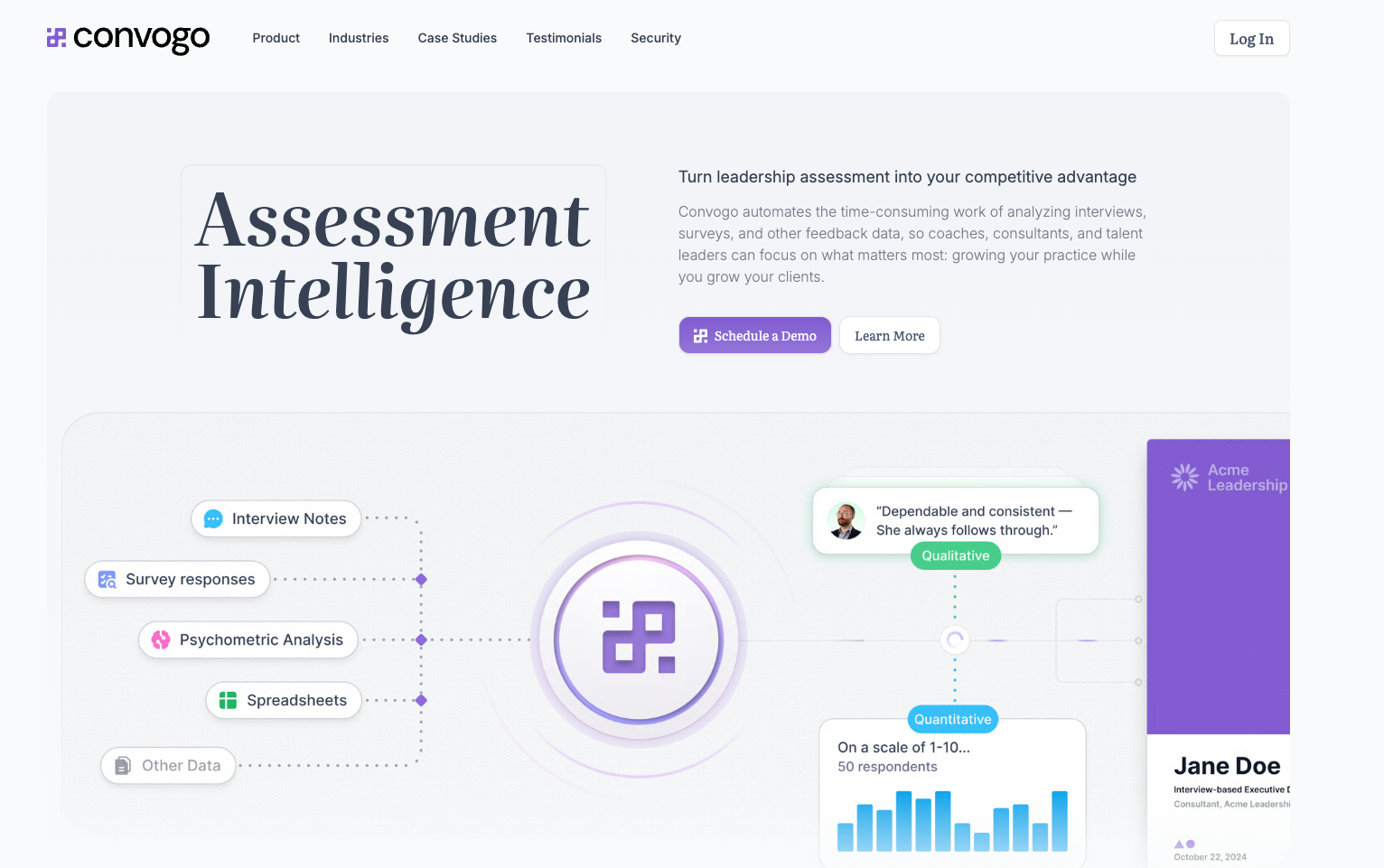
Convogo was a San Francisco-based software platform that used AI to help executive coaches, consultants, and HR teams with their work. The tool handled the heavy lifting of leadership assessments and feedback reporting.
The platform saved time by automatically analyzing interviews, surveys, and other feedback data. This let coaches focus on actual coaching instead of spending hours writing reports.
What Convogo offered:
- Automated analysis of leadership feedback and survey data
- Faster report creation for coaches and consultants
- Tools built specifically for talent development work
The company started in an unusual way. Co-founder Matt Cooper's mother worked as an executive coach. She asked him a simple question: Could AI handle the boring parts of report writing so she could spend more time on meaningful coaching work? That question led to a weekend hackathon project that eventually became Convogo.
Over two years, the platform served thousands of coaches and worked with top leadership development firms worldwide.
Who Are the Founders Joining OpenAI?

Three founders built Convogo and will now join OpenAI. They are Matt Cooper, Evan Cater, and Mike Gillett. The deal was structured as an all-stock transaction.
Matt Cooper led the team and came up with the original idea. His mother's work as an executive coach inspired him to build Convogo. He announced the acquisition on LinkedIn.
At OpenAI, all three founders will work on AI cloud efforts. This includes building tools and platforms that help businesses use AI models in practical ways.
What they bring to OpenAI:
- Experience in turning AI capabilities into real business tools
- Knowledge of how to build purpose-built AI applications
- Understanding of assessment frameworks and sensitive use cases
Their main skill lies in bridging the gap between what AI can do and what businesses actually need. This made them valuable to OpenAI's enterprise strategy.
What Are the Deal Terms?

This acquisition is an acqui-hire. OpenAI is hiring the team, not buying the company's technology or intellectual property.
The deal was settled entirely in stock. The exact value remains undisclosed. As part of this agreement, Convogo's product will shut down completely.
Key details of the deal:
- All-stock transaction with undisclosed value
- No transfer of Convogo's technology or IP to OpenAI
- The founding team joins OpenAI's workforce
- Convogo's platform will be discontinued
Current Convogo users will need to export their data and find new tools for their coaching work.
Why Is OpenAI Making This Move Now?
OpenAI is pushing hard into the enterprise market. The company now has over 1 million business customers and 7 million ChatGPT for Work seats. Enterprise usage of its tools has grown 8x since November 2024.
The Convogo team will work on OpenAI's AI cloud efforts. This means building tools that help businesses turn AI models into practical applications. Model hosting, workflow automation, and enterprise tools are all part of this work.
This acquisition fits a clear pattern:
- OpenAI partnered with Accenture in December 2025, giving 40,000 employees ChatGPT Enterprise access
- The company has made nine acquisitions in the past year
- Most deals focus on bringing in talented teams who understand how to build real business tools
OpenAI sees a gap between what AI can do and what businesses actually use it for. The Convogo founders spent two years solving this exact problem for coaches. Their experience in building purpose-driven AI tools made them valuable to OpenAI's enterprise plans.
The timing makes sense. OpenAI faces growing competition from Google and Anthropic in the enterprise space. Hiring teams who already know how to turn AI into business outcomes helps OpenAI stay ahead.
How Does This Fit Into OpenAI's Acquisition Spree?
Convogo marks OpenAI's ninth acquisition in about one year. This pace shows how seriously OpenAI is using deals to grow its talent and capabilities.
Most of these acquisitions follow the same pattern. OpenAI hires the team, and the original product either shuts down or gets absorbed into OpenAI's systems.
Recent OpenAI acqui-hires include:
- Sky, an AI interface for Mac, was folded into OpenAI's ecosystem
- Statsig, a product testing firm, was also absorbed
- Roi, Context.ai, and Crossing Minds all shut down after their teams joined OpenAI
The Convogo deal follows this same playbook. The team joins, and the product disappears.
One deal stands out as different. OpenAI's acquisition of Jony Ive's io Products is the only case where the product roadmap continues. The two companies are working together to build AI hardware while io Products keeps its own development going.
This tells us something important. OpenAI mostly uses acquisitions to bring in skilled people, not to buy technology. The company believes the right teams can build better tools inside OpenAI than they could on their own.
What Does This Mean for OpenAI's Enterprise Strategy?
OpenAI is not just building AI models. The company wants to become the go-to platform for businesses using AI.
The numbers show this shift. OpenAI now serves over 1 million business customers. ChatGPT Enterprise seats have grown 9x year-over-year. Workers using these tools report saving 40 to 60 minutes daily.
Acquisitions play a key role in this strategy:
- Buying teams is faster than hiring individual employees
- Acquired teams bring real experience in solving business problems
- These hires understand how to turn AI capabilities into working products
The Convogo team fits perfectly here. They spent two years learning what coaches and HR teams actually need from AI. This kind of hands-on product knowledge is hard to find and takes time to build.
OpenAI faces strong competition in the enterprise market. Anthropic focuses mainly on business sales. Google's Gemini is pushing into the same space. Open-source AI providers are also targeting enterprise customers.
By bringing in specialized teams through acquisitions, OpenAI can move faster than competitors. Each team adds specific skills that would take years to develop internally. This approach helps OpenAI build a complete enterprise offering while others are still catching up.

Comments
Your comment has been submitted