Apple March 2026 Event: Every Product Launched, Every Trade-Off You Need to Know
Apple does not usually do things this way. A full week of product launches, no live keynote, and six devices dropped across multiple product lines in just three days. March 2026 was different from anything Apple has done before, and the products that came out of it ranged from a $599 laptop that broke a long-standing price barrier to professional monitors built for high-end creative work.
Some of the launches were expected. Others caught analysts off guard. There were trade-offs worth knowing about, products people had been waiting for that never showed up, and a few expert opinions that cut through the excitement with a more grounded take.
This article covers everything Apple announced, what changed, what got skipped, and who each product is actually built for. If you want the full picture of Apple's biggest product week in years, it is all here.
6
Products launched in one week
$599
MacBook Neo — cheapest Mac ever
$100–$400
Price increases on Air & Pro
3 Days
March 2 to March 4, 2026
Executive Summary
Apple's March 2026 event ran from March 2 to March 4, with six products launched across its main lineup. Here is everything covered in this article:
- MacBook Neo launched at $599, the most affordable Mac ever, powered by the A18 Pro chip with 8GB RAM and a 13-inch Liquid Retina display
- iPhone 17e kept its $599 price but doubled base storage to 256GB and added MagSafe for the first time
- iPad Air M4 arrived at the same price as its predecessor, now up to 30% faster with 12GB unified memory
- MacBook Air M5 starts at $1,099, with 512GB base storage and Wi-Fi 7 support
- MacBook Pro M5 Pro and M5 Max start from $2,199, with Thunderbolt 5 and faster SSD speeds
- Studio Display and Studio Display XDR refreshed with Thunderbolt 5 and mini-LED on the XDR model
- Several expected products, including the iPad 12 and Mac Studio, did not appear
What Is the Apple March 2026 Event and Why Is Everyone Talking About It
Apple CEO Tim Cook posted on social media at the start of March 2026 with a simple message: “a big week ahead.” That turned out to be an understatement. Instead of the usual single keynote, Apple ran a full week of product launches from March 2 to March 4, dropping press releases and product videos on YouTube across multiple days. There was no livestream this time.
On March 4, Apple held a private hands-on event called the “Special Apple Experience” in New York City, London, and Shanghai, where selected media got to try the new devices in person.
By the end of the week, Apple had officially launched six products across its main product lines:
- iPhone 17e, the new affordable iPhone with double the base storage
- iPad Air M4, a faster tablet at the same starting price
- MacBook Neo, Apple's most affordable laptop ever at $599
- MacBook Air M5, with better storage and new wireless speeds
- MacBook Pro with M5 Pro and M5 Max chips for demanding work
- Studio Display and Studio Display XDR, two new monitors for desk setups
The shared focus across all of these was clear: faster AI processing through Apple Intelligence, more storage included from the start, and next-gen wireless connectivity. It was the biggest single-week product push Apple has ever done across this many product lines at once.
The Story Behind Apple's Biggest Product Week in Years

Apple had already been expected to refresh a few product lines in early 2026, but the number of products that arrived in a single week caught a lot of people off guard. Even before the week officially started, Apple accidentally gave things away. A regulatory document briefly appeared on Apple's own website listing a “MacBook Neo (Model A3404)” before it was taken down, confirming that a new low-cost MacBook was coming.
There was also a bigger concern running in the background. Samsung, which supplies RAM chips to Apple, confirmed a 100% price increase on all RAM orders. This became known as the “RAMageddon” crisis, and it meant Apple product prices were expected to climb.
Apple held the line on the iPhone 17e and iPad Air M4, keeping both at the same starting prices as their predecessors. The MacBook Air and MacBook Pro did see price increases of $100 to $400 compared to the previous models.
A few other things worth knowing about the context behind this launch:
- IDC analyst Francisco Jeronimo called the MacBook Neo “one of the most important announcements for Apple in the Mac product line”
- He noted it marks a real shift in how Apple has traditionally priced its computers, which had rarely dipped below $999
- Apple reportedly briefed retail store staff ahead of the launch the same way it does before a new iPhone release
- Internal sources expected a “major rush” of buyers, driven largely by the MacBook Neo's $599 price point
The combination of the price pressure, the accidental leak, and the scale of the launch made this week feel like something Apple had been building toward for a while.
Everything Apple Launched at Its March 2026 Event: A Full Breakdown
Apple launched six products across its main product lines during the March 2026 event. Here is a clear look at each one, what it costs, and what actually changed.
MacBook Neo: Apple's Cheapest Laptop Ever
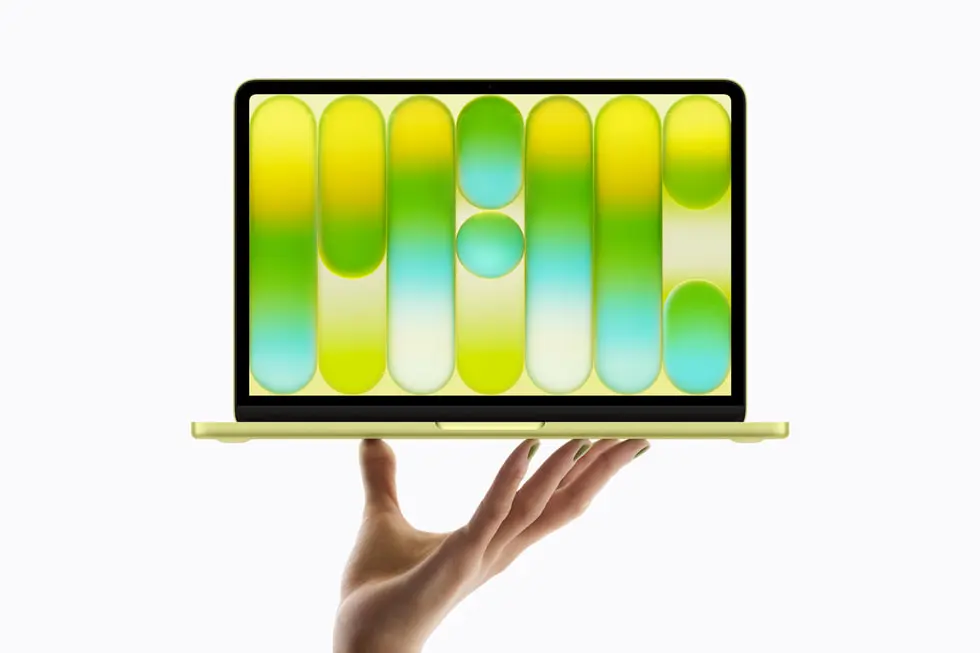
The MacBook Neo is the standout product of the entire week. It starts at $599 and brings macOS to a price point Apple has never offered before. It runs on the A18 Pro chip, the same one found in the iPhone 16 Pro, though the laptop version uses a 5-core GPU rather than the phone's 6-core setup. The design is all-aluminum with a 13-inch Liquid Retina display, a fanless build, and up to 16 hours of battery life.
- Four colors available: Silver, Indigo, Blush, and Citrus, each with a color-matched keyboard
- Two USB-C ports (one USB 3, one USB 2), no MagSafe and no backlit keyboard on the base model
- Supports Apple Intelligence through macOS
- Education pricing drops to $499 for the 256GB model and $599 for the 512GB
- The 512GB model at $699 includes a Touch ID sensor; the base $599 model does not
- Pre-orders opened March 4, with the laptop shipping from March 11
iPhone 17e: The Affordable iPhone 17 Family Option
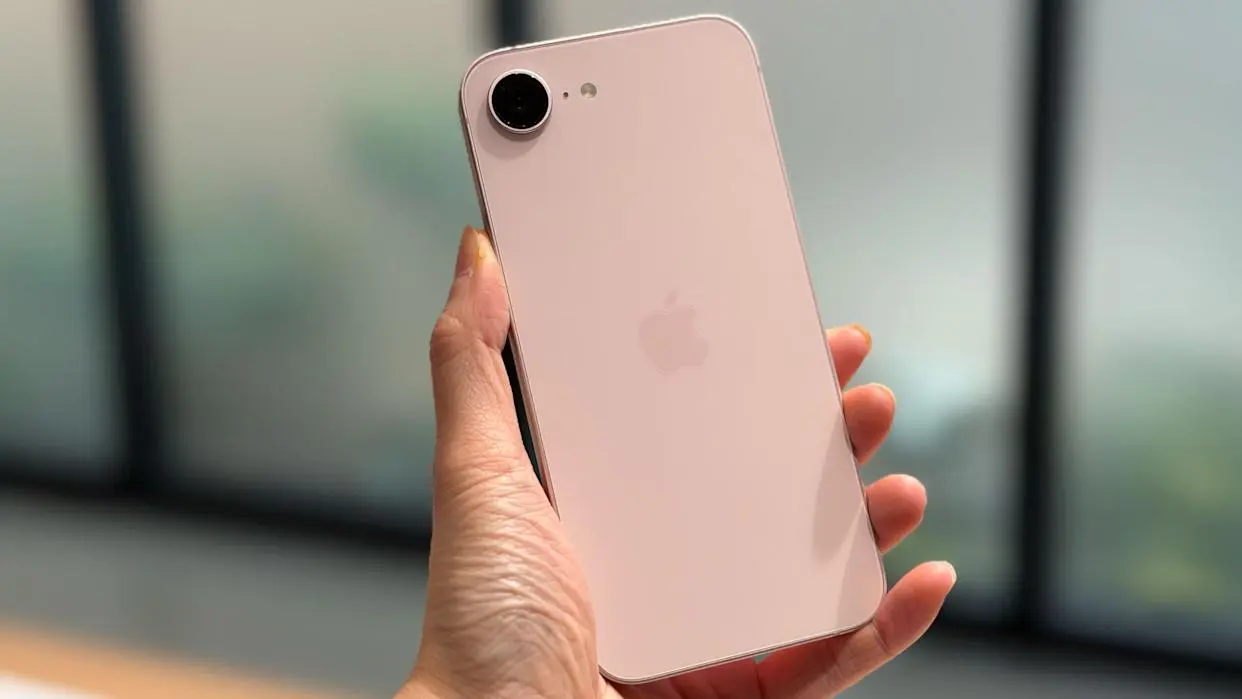
The iPhone 17e keeps the same $599 starting price as last year's iPhone 16e, but now includes 256GB of storage as standard, double what the previous version offered. It runs on the A19 chip, the same one found in the standard iPhone 17, paired with Apple's C1X modem. MagSafe arrives on an “e” model for the first time, supporting wireless charging up to 15W with Qi2 compatibility.
- 48MP Fusion camera with optical-quality 2x zoom from a single lens
- 6.1-inch Super Retina XDR display with Ceramic Shield 2 for better scratch resistance
- Available in Black, White, and Soft Pink
- Ships from March 11
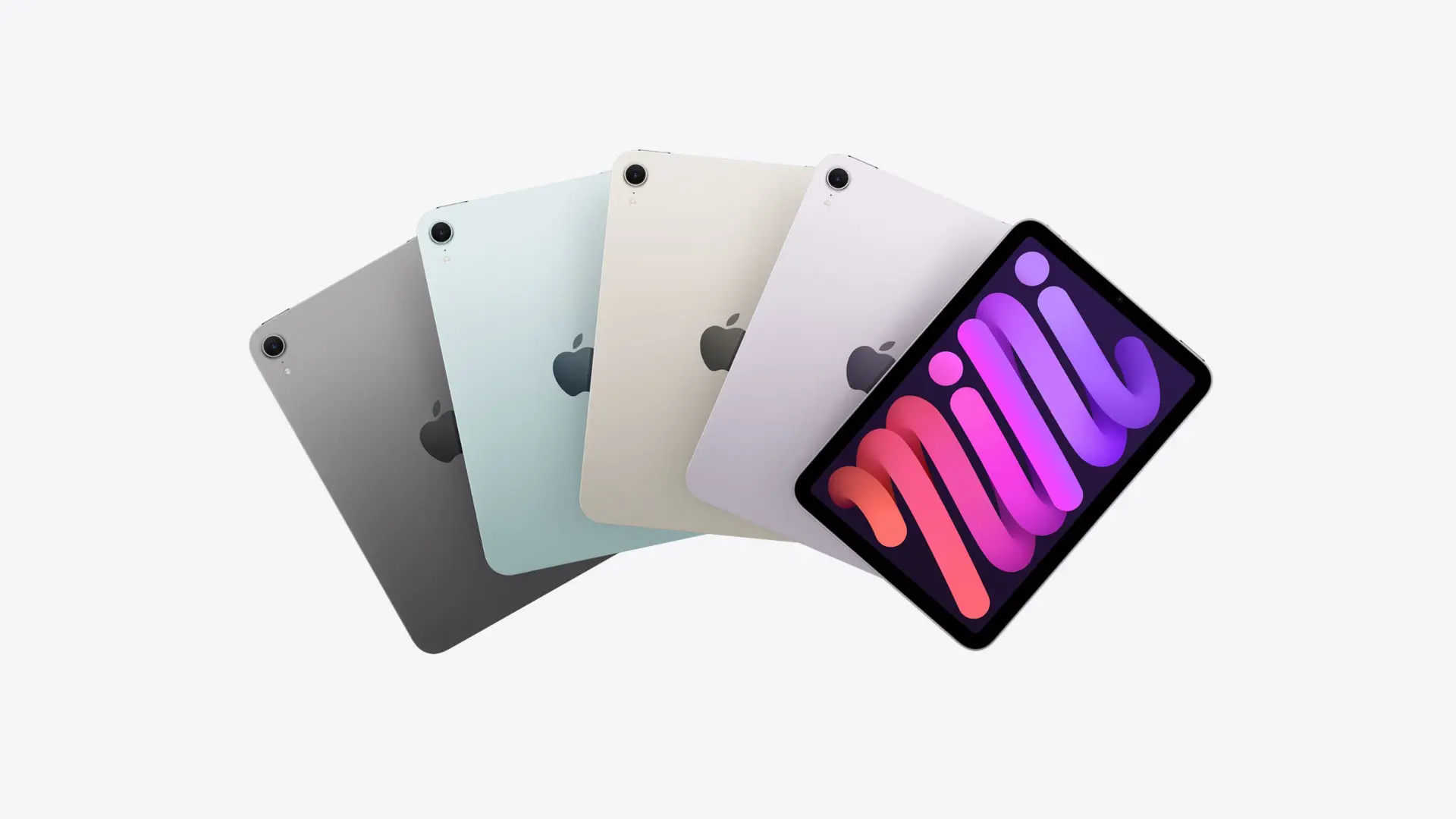
iPad Air M4: A Faster iPad at the Same Starting Price
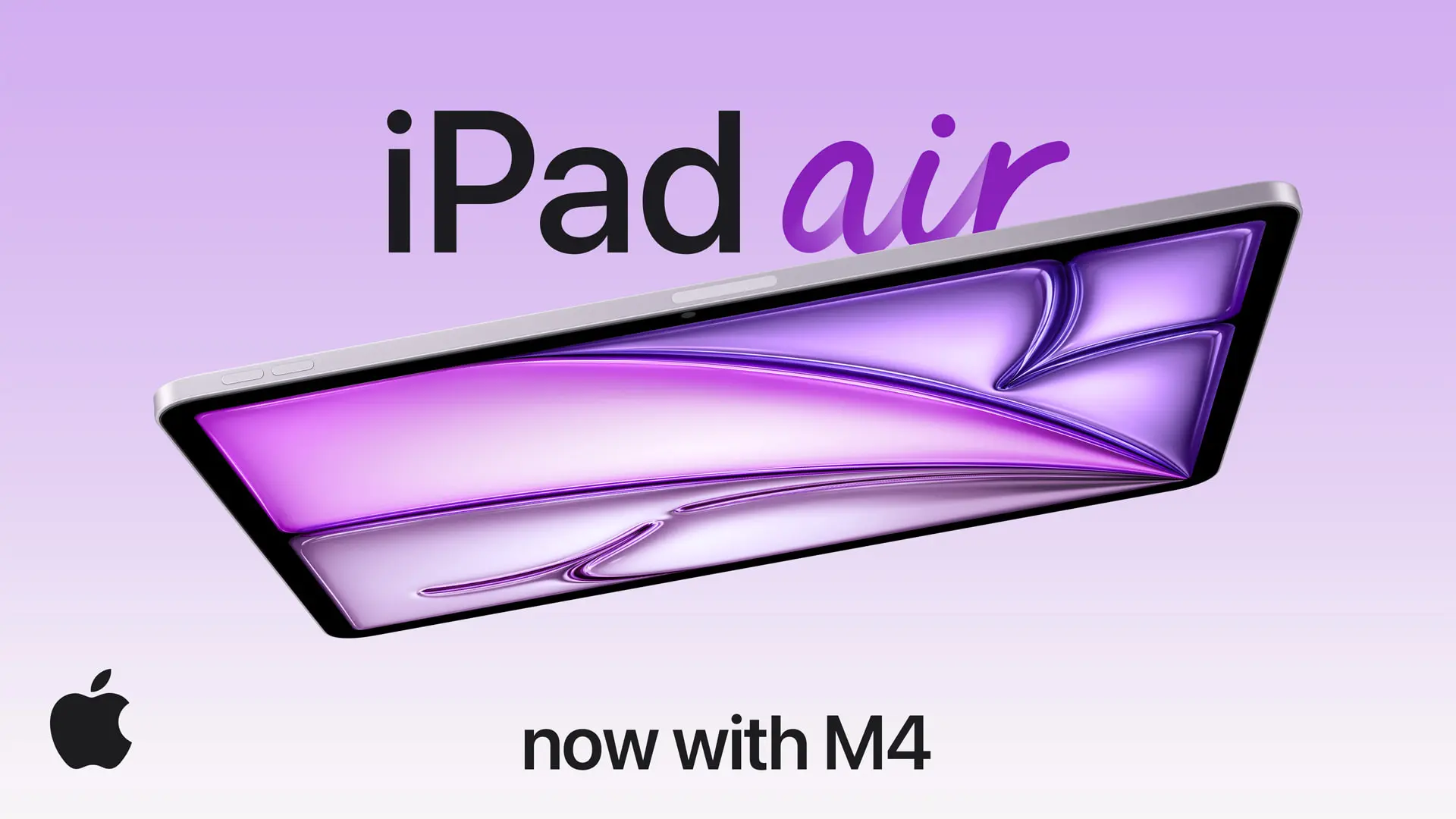
The iPad Air M4 keeps its pricing at $599 for the 11-inch and $799 for the 13-inch, while delivering a meaningful performance jump over the M3 version. Apple says it is up to 30% faster than the iPad Air M3 and up to 2.3 times faster than the M1 model. Unified memory climbs to 12GB, which is 50% more than the previous generation.
- Wi-Fi 7 and Bluetooth 6 added through Apple's N1 chip
- Cellular models include the C1X modem for faster and more efficient mobile data
- No design changes; same two sizes and Touch ID setup as before
MacBook Air M5: Same Familiar Laptop, Better Internals
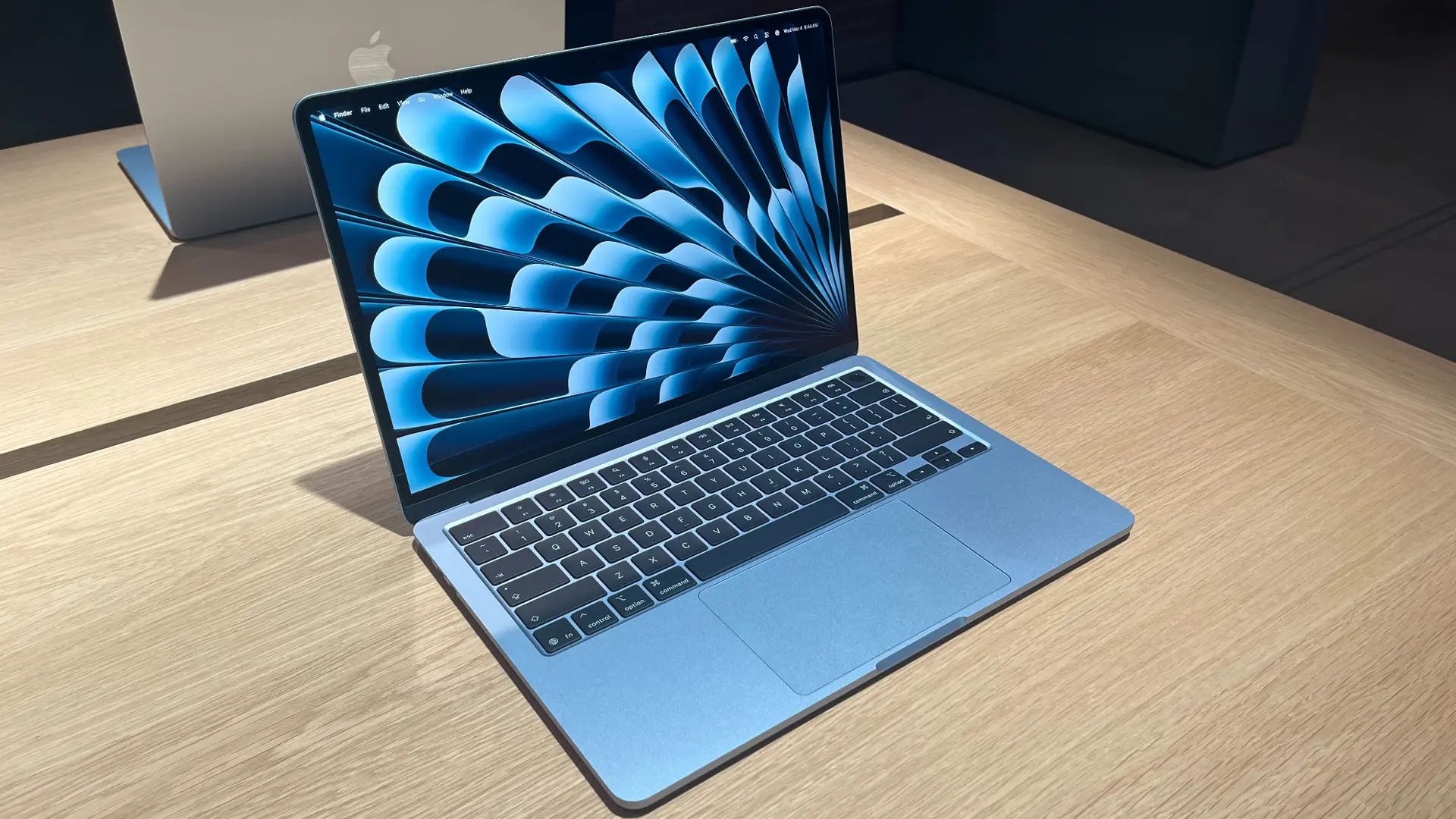
The MacBook Air M5 keeps the same thin, fanless design that made the M4 version popular, but arrives with stronger internals across the board. It starts at $1,099 for the 13-inch and $1,299 for the 15-inch, which is $100 more than the M4 versions. The base storage doubles to 512GB, and the maximum storage option now reaches 4TB.
- M5 chip with improved on-device AI performance for Apple Intelligence features
- Wi-Fi 7 and Bluetooth 6 via Apple's N1 chip
- SSD read and write speeds are faster than the previous generation
- No visual changes to the design or port selection
MacBook Pro M5 Pro and M5 Max: For Heavy Workloads
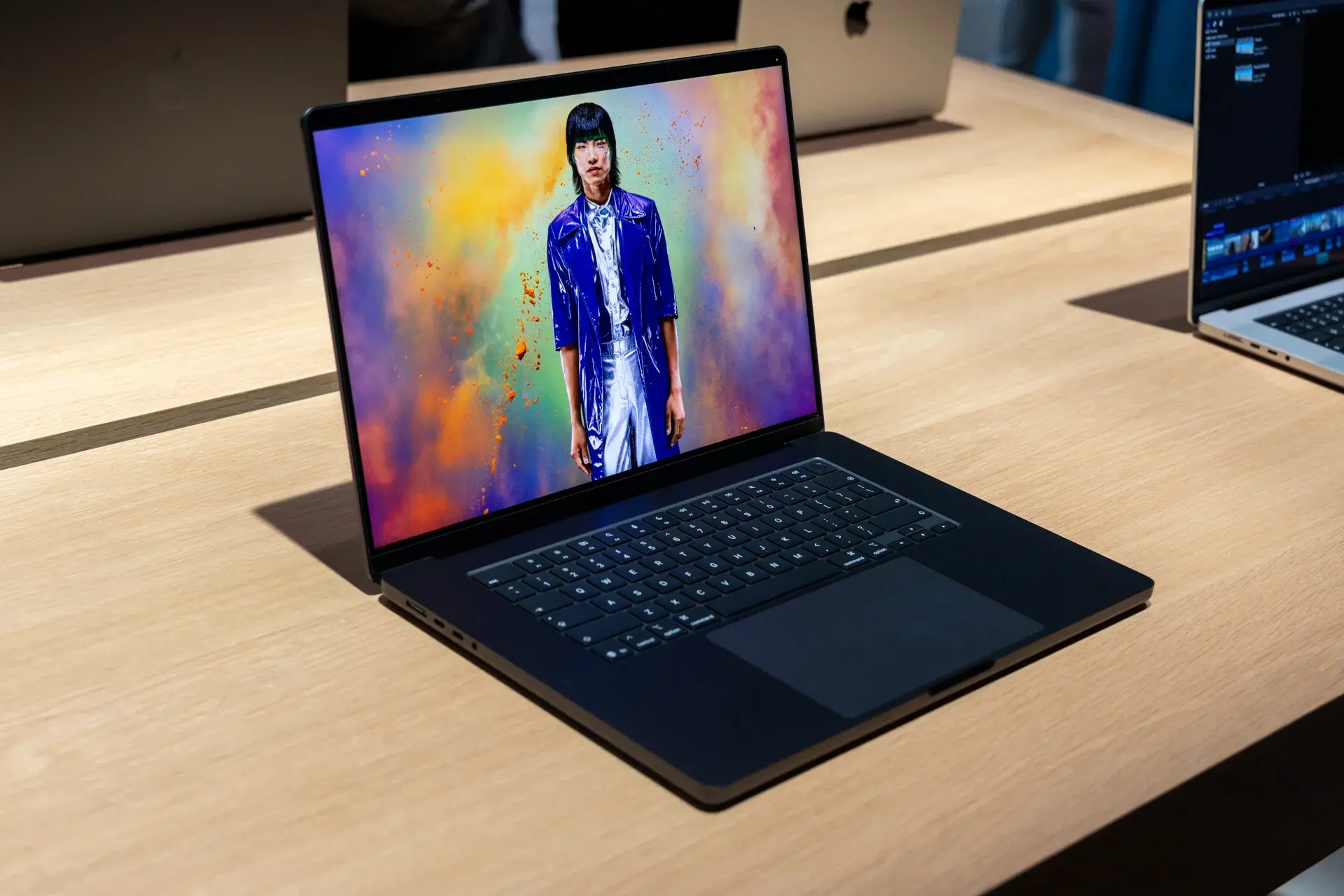
The new MacBook Pro models are built for users who push their machines hard. They come in 14-inch and 16-inch sizes, starting at $2,199 for the 14-inch M5 Pro and going up to $3,899 for the 16-inch M5 Max. The M5 Pro uses an 18-core CPU with what Apple calls a “Fusion Architecture,” integrating two 3nm dies into a single chip.
- Thunderbolt 5 ports, Wi-Fi 7, and Bluetooth 6 via the N1 chip
- Base storage starts at 1TB for M5 Pro models and 2TB for M5 Max
- SSD performance is up to 2x faster than the previous MacBook Pro generation
- Available in Space Black and Silver
Studio Display and Studio Display XDR: New Monitors for Creators

Apple refreshed its display lineup with two new monitors. The standard Studio Display stays at $1,599 and keeps its 27-inch 5K Retina panel, now updated with Thunderbolt 5 connectivity and a 12MP Center Stage camera. The new Studio Display XDR sits at $3,299 and replaces the older Pro Display XDR, which Apple has discontinued.
- XDR model uses mini-LED backlighting with 2,304 dimming zones for improved contrast
- Studio Display XDR reaches up to 2,000 nits peak HDR brightness with a 120Hz Adaptive Sync refresh rate
- Standard Studio Display remains at 60Hz with 600 nits brightness
- XDR supports up to 140W host charging; the standard model caps at 96W
- Both models include two Thunderbolt 5 ports and two USB-C ports
All Six Products at a Glance
| Product | Starting Price | Key Chip | Biggest New Feature |
|---|---|---|---|
| MacBook Neo | $599 | A18 Pro | First Mac under $999 |
| iPhone 17e | $599 | A19 | MagSafe + 256GB base storage |
| iPad Air M4 | $599 | M4 | 30% faster, 12GB RAM |
| MacBook Air M5 | $1,099 | M5 | 512GB base storage, Wi-Fi 7 |
| MacBook Pro M5 Pro | $2,199 | M5 Pro | Thunderbolt 5, more storage |
| Studio Display XDR | $3,299 | N/A | Mini-LED, 120Hz, 2,000 nits |
Is the Apple March 2026 Lineup Worth It? The Trade-Offs Nobody Is Ignoring
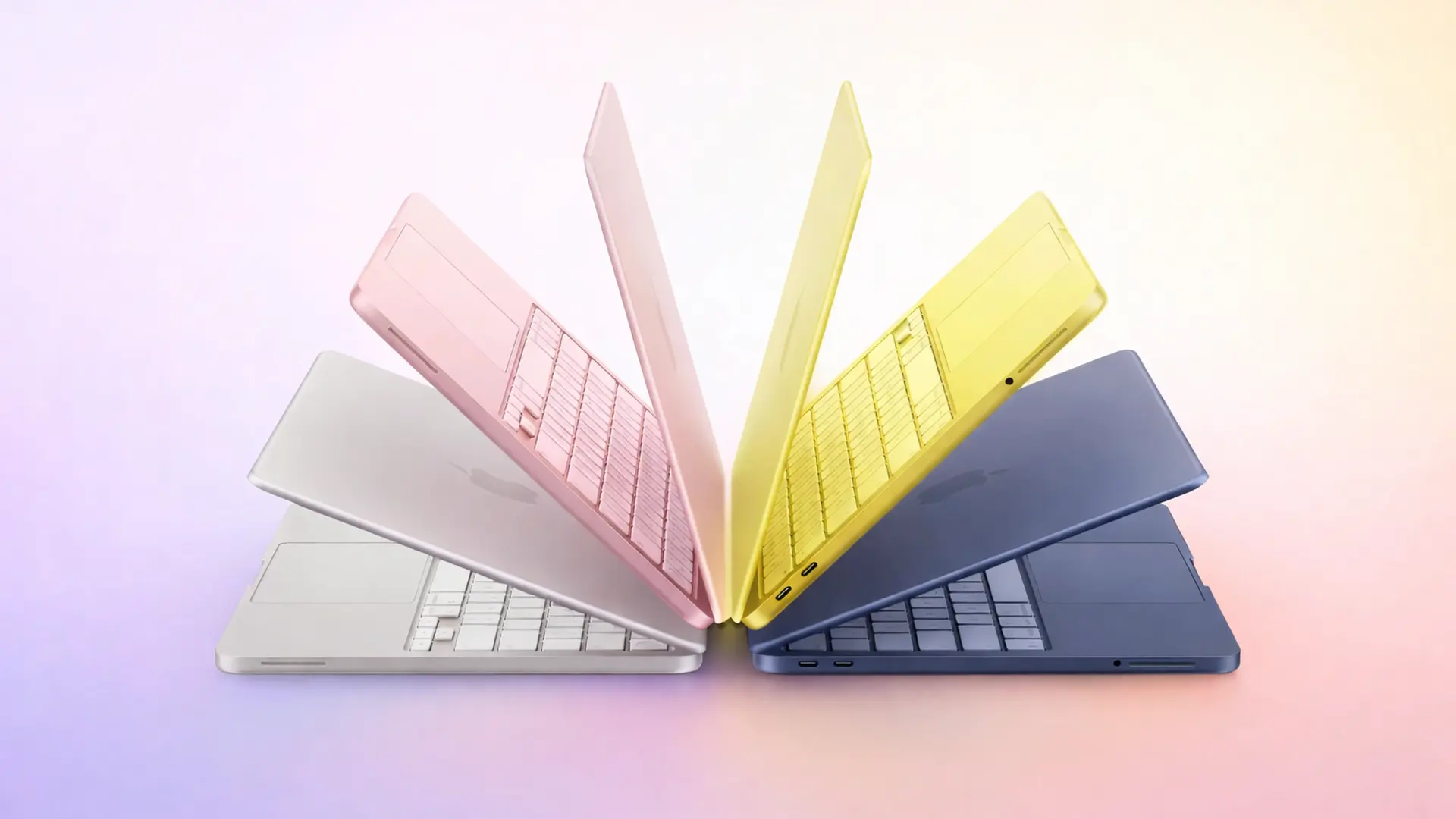
Apple made some clear compromises to get the MacBook Neo down to $599, and it is worth knowing what they are before making a buying decision.
The base model does not come with a backlit keyboard, which makes typing in low light harder than on any other MacBook. The display runs at 60Hz with no high refresh rate option, and the screen bezels are noticeably thicker compared to the MacBook Air. On the performance side, the Neo comes with just 8GB of RAM, which some reviewers have flagged as a potential issue for users who run multiple apps at once.
The port situation is also limited: there are only two USB-C ports, and one of them is a USB 2 port that maxes out at 480Mb/s, which is slow by current standards. There is no MagSafe, no Thunderbolt support, and the chip is an A18 Pro from the iPhone line rather than an M-series processor.
That said, the other side of the picture is worth looking at too:
- Benchmark tests show the A18 Pro actually beats the M1 MacBook Air in both single-core and multi-core performance
- For everyday use like browsing, streaming, and working on documents, the Neo handles tasks well
- At $599, it is the first Mac laptop that can genuinely compete with Chromebooks and budget Windows PCs on price
- IDC analyst Francisco Jeronimo noted that Apple has traditionally kept MacBook entry prices near or above $999, and moving to $600 signals a deliberate push to grow the macOS user base
The MacBook Air and MacBook Pro also came with price increases worth noting. The MacBook Air M5 costs $100 more than the M4 at the same storage tier. The MacBook Pro M5 Pro starts $200 higher than the M4 Pro version did. Apple doubled the base storage across these models to partially justify the higher cost, but the increases are still real and worth factoring in.
What Apple Skipped at Its March 2026 Event
Apple launched a lot of products during the March 2026 event, but there were several things that did not show up, and some of them had been expected.
The base iPad 12 was notably absent. Apple typically announces its entry-level iPad alongside the iPad Air, so skipping it this time was a surprise. Many had expected it to arrive with an A18 or A19 chip and support for Apple Intelligence, but it did not appear. What Apple Intelligence actually requires, and does, on current hardware is covered in our Apple Intelligence guide.
A few other things that were missing:
- No Mac Studio refresh, despite Bloomberg's Mark Gurman suggesting one was in development. It was reportedly still behind schedule at the time of the event
- No touchscreen MacBook, which has been rumored for a while. Gurman expects it to arrive later in 2026, likely after the iPhone 18 launch
- No MacBook Air with OLED display, as that update is not expected until 2028 at the earliest
- No Apple Watch or AirPods updates of any kind
- No Mac mini or iMac refreshes
There was also no public livestream. Apple chose press releases and a private in-person experience instead, which meant most people had no way to follow the announcements in real time outside of media coverage.
On the final day of the week, March 5, Apple made no new product announcements at all. The only update that came through was a confirmation that Apple holds the exclusive U.S. broadcast rights to the upcoming Formula 1 season.
Expert Reactions and What People Think of Apple's March 2026 Launch
The response to Apple's March 2026 event came from multiple directions, and the opinions were not all the same.
IDC analyst Francisco Jeronimo had a strong take on the MacBook Neo specifically. He called it one of the most important announcements for Apple in the Mac product line, noting that Apple has always positioned the MacBook as a premium product with entry prices typically starting near or above $999. He went further, saying “The MacBook Neo will reshape the entry-level laptop segment, particularly in education, where Chromebooks have dominated shipments in recent years.”
Qualcomm also weighed in, given that Apple chose to power the Neo with a mobile chip rather than its M-series silicon. Kedar Kondap, SVP of compute and gaming at Qualcomm, pushed back on the idea that Apple had an advantage here. He said, “From our perspective, there's nobody better suited in this industry than Qualcomm to be able to address this challenge,” pointing to the company's presence across both phone and PC hardware.
On the iPhone 17e, The Verge's Nilay Patel kept his assessment grounded. He wrote that there is nothing mindblowing about the device, and that is probably exactly right for a $599 phone that most people will buy on sale or get for free on contract.
Public reaction on Reddit and across tech communities was more divided, particularly around the MacBook Neo:
- The MacBook Air M5 received mostly positive feedback, with the jump to 512GB base storage getting the most praise from users
- The MacBook Neo split opinion sharply, with some people welcoming the $599 price and others pointing to the 8GB of RAM and 60Hz display as reasons to look elsewhere
- Critics also flagged the thick bezels and the absence of Thunderbolt ports as signs Apple cut too deep to hit the price
- On the other side, supporters argued that getting the full macOS experience at $599 makes it a serious option compared to Chromebooks and budget Windows laptops
The price increases on the MacBook Air and MacBook Pro drew criticism too, especially given the ongoing RAM cost pressures. Some users accepted the $100 increase on the Air M5 as reasonable since base storage doubled from 256GB to 512GB. Others felt the timing, coming during a period of rising component costs, was hard to overlook.
Who Should Buy Which Apple Product From the March 2026 Event

With six products launched in one week, it helps to know which one actually fits your needs.
The MacBook Neo is the right pick for first-time Mac buyers, students, and anyone currently using a Chromebook or a low-cost Windows laptop who wants to move to macOS without spending over $1,000. It handles everyday tasks well, including browsing, streaming, writing, and light photo work.
- Not the right choice for heavy multitasking, video editing, or running large creative apps
- Also worth skipping if you rely on Thunderbolt accessories or need fast external storage speeds
The iPhone 17e suits budget-conscious buyers who want modern iPhone performance, MagSafe support, and a solid amount of storage without paying premium prices. It is not aimed at people who prioritize camera quality above everything else.
The iPad Air M4 is a strong option for anyone who uses a tablet for real productive work, including editing, note-taking, and running demanding apps. It is also a clear upgrade for anyone still on an M1 or M2 iPad Air who has started to notice the performance gap.
The MacBook Air M5 and MacBook Pro M5 Pro and M5 Max are not really aimed at casual users. These are for professionals, developers, video editors, and creators who need their machine to handle sustained workloads without slowing down. The Air M5 covers most professional needs at a lower price, while the Pro models are for those who push their hardware hard every single day.
Make Your New Mac Smarter From Day One
Elephas is an AI assistant that works across every app on your Mac — write, research, and organize without switching tabs.
Try Elephas Free