Apple CEO John Ternus to Replace Tim Cook as the New CEO in September 2026
On Monday, April 20, 2026, Apple announced that John Ternus will become Apple's new CEO on September 1, 2026. Tim Cook, the CEO of Apple for almost 15 years, will become executive chairman of Apple's board of directors, focused on government relations and geopolitics in his new role as executive chairman.
On the surface, the succession looks smooth. Underneath, three signals complicate that reading: the timing surprised Wall Street; Ternus has pushed back on Cook's biggest product bets; and Apple's next major AI launch will run on Google's technology, not Apple's own.
John Ternus, the senior vice president of hardware engineering, will now lead the world's most valuable technology company into its next era. So, is this just another smooth Apple transition, or is something deeper shifting inside the company? Let us look into it.
Sept 1, 2026
Ternus becomes CEO
$4T
Apple market cap under Cook
25 years
Ternus at Apple
8th
Apple CEO in history
Executive Summary
- John Ternus, 50, becomes Apple's 8th chief executive officer on September 1, 2026. Tim Cook becomes executive chairman of Apple's board of directors.
- Srouji takes an expanded hardware leadership role covering both hardware technologies and hardware engineering.
- Apple's board approved the appointment unanimously on the Friday before the Monday announcement.
- Under Cook, Apple grew from near-bankruptcy to a $4 trillion market capitalization; revenue has nearly quadrupled to over $416 billion.
- Ternus walks into a foldable iPhone launch, a Siri reset built on Google's Gemini model, and delayed smart glasses and smart home devices.
Who Is John Ternus
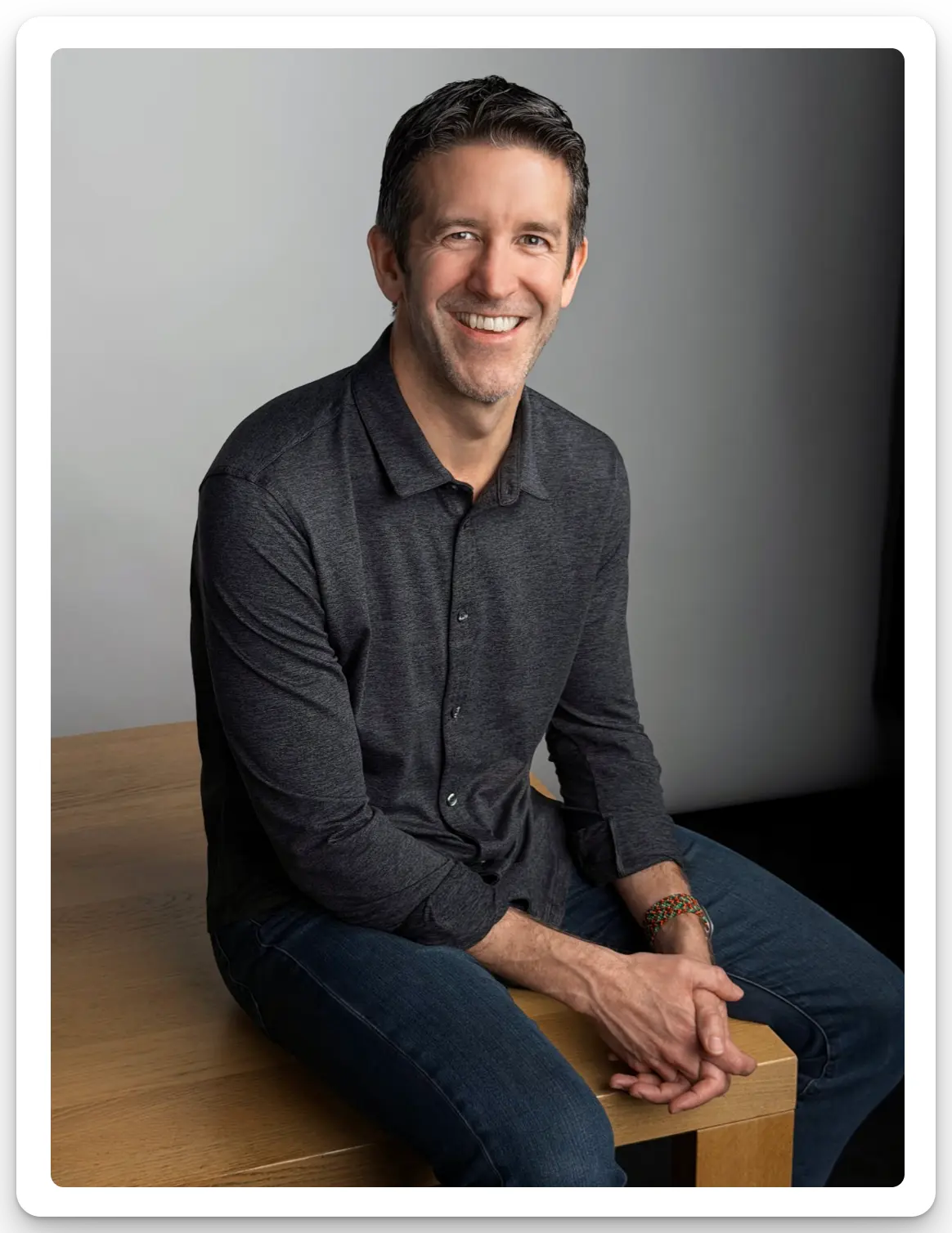
Ternus is 50 years old and has spent close to 25 years inside the company. He joined Apple's product design team in 2001, four years after he earned his bachelor's degree in mechanical engineering from the University of Pennsylvania. Prior to Apple, Ternus worked as a mechanical engineer at Virtual Research Systems for four years.
- Age 50, and set to become Apple's eighth chief executive officer on September 1, 2026
- Joined Apple in 2001 after four years as a mechanical engineer at Virtual Research Systems
- Became a vice president of hardware engineering in 2013
- Joined the executive team in 2021, the role he still holds until the handover
- Hardware oversight across iPhone, Mac, and the wearables lineup
His fingerprints are on the colorful $599 laptop that broke Apple's long-held pricing floor at the Apple March 2026 event. His team shaped the iPhone 17 lineup last fall, and his innovation in materials introduced a new recycled aluminum compound that now ships across multiple hardware products. Recent signature work includes:
- The iPhone 17 Pro, iPhone 17 Pro Max, and the radically thin iPhone Air released last fall
- The $599 MacBook that broke Apple's premium-only laptop pricing orthodoxy
- A new recycled aluminum compound used across several product lines
- An engineering approach focused on reliability and durability across Apple devices
In his own statement after the announcement, Ternus said: “Having spent almost my entire career at Apple, I have been lucky to have worked under Steve Jobs and to have had Tim Cook as my mentor.” He added that he was “humbled to step into this role,” saying: “I promise to lead with the values and vision that have come to define this special place for half a century.” In Ternus's case, that line is literal. He has spent nearly a quarter century at Apple already.
What John Ternus Inherits From the Cook Era
Tim Cook joined Apple in 1998 after 12 years at IBM and a stint at Compaq. Back then, the company was near bankruptcy. He became CEO in 2011, shortly before Steve Jobs passed away. The Cook-era numbers tell a very different story:
- Market capitalization today sits at $4 trillion
- Yearly revenue has nearly quadrupled, from $108 billion in fiscal year 2011 to over $416 billion in fiscal year 2025
- Over 500 retail stores operating in 200 countries and territories
- Over 2.5 billion active devices in the installed base
- Services alone now a $100 billion-a-year business
Under Cook, Apple expanded its global footprint substantially. The company created new categories like Apple Watch, AirPods and Apple Vision Pro. Cook also pushed Apple onto its own silicon, a transition that made Apple a vertically integrated hardware company in a way few peers have matched. He helped build out existing product lines and launched entirely new product lines around wearables. Services tied to that ecosystem now anchor a portfolio of products and services:
- iCloud for storage and device sync
- Apple Pay across countries and payment rails
- Apple Music and Apple TV for entertainment and media
Cook's public work was as visible as the operating one. Highlights include:
- Argued for privacy as a fundamental human right
- Stood up to the FBI in 2016 during the San Bernardino iPhone encryption fight
- Announced a $600 billion U.S. spend over five years alongside President Donald Trump last August
- Trump nicknamed him “Tim Apple” and told him: “I love that you're doing this”
Colleagues say Ternus is not yet ready to take over that public-policy role. That part of the job stays with Cook.
CEO John Ternus Faces the AI Challenge
For Ternus, who becomes Apple's next CEO in September, the hardest problem is artificial intelligence. Apple has lagged its megacap peers on AI, and the visible setbacks are specific:
- Siri's major upgrade was delayed through last year
- Apple overhauled its AI leadership in December last year and brought in a Google veteran
- The next Siri launches this year on Google's Gemini AI model, an unusual shift for a company that typically builds its core technology in-house
- Apple's smart home and smart glasses launches have slipped because AI models are not yet ready
Ternus has already begun reshaping the organization for the AI era. Earlier in April 2026, he reorganized the hardware engineering group around what he calls an internal AI platform, a system meant to speed up product development and improve device quality. His near-term AI priorities:
- Deploy AI quickly throughout Apple's operations
- Stay closely involved with hardware engineering efforts even after he takes the CEO role
- Land the Gemini-powered Siri without brand damage
- Catch up with AI-native competitors on on-device intelligence
Dipanjan Chatterjee, an analyst at Forrester, put the pressure in plain terms: “He must resist the temptation of incrementalism that has plagued Apple of late. As Ternus assumes the helm, he must define Apple's future as ferociously as he defends its past.” That sentence captures the market's read in full. Apple needs a leader who will make product decisions, not defer them. The Gemini-Siri decision is also a live question for privacy-minded users, which we examine in our deeper piece on local AI vs cloud AI and data safety.
The New CEO's Leadership Team
Apple did not stop at a CEO change. Johny Srouji, previously senior vice president of hardware technologies, has been promoted to chief hardware officer. His expanded role also covers hardware engineering, the domain Ternus has owned for years. Sabih Khan stays in place as chief operating officer. Arthur Levinson, non-executive chairman for the past 15 years, becomes lead independent director at the same time. Together they form the operating core of Apple around Ternus:
- Ternus keeps a product-first focus from the top
- Srouji owns the full hardware organization, covering both hardware technologies and hardware engineering
- Khan runs operations as chief operating officer
- Cook continues as statesman, handling policymakers around the world
- Levinson anchors the board as lead independent director
Levinson said on behalf of the board: “We believe John is the best possible leader to succeed Tim, and as he transitions to CEO we know his love of Apple, his leadership, deep technical knowledge, and relentless focus on creating great products will help lead Apple to an extraordinary future.”
Cook described Ternus directly in his own statement. He said Ternus has “the mind of an engineer, the soul of an innovator, and the heart to lead with integrity and with honor.” He called Ternus “the right person to lead Apple into the future.” Coming from Cook, whose praise tends to be measured, that wording is striking. The endorsement closes the question of whether the board considered external candidates.
The New CEO's Product Roadmap
Ternus walks into one of the busiest product pipelines Apple has ever had in flight. The known in-flight bets:
- The first foldable iPhone, which Bloomberg describes as one of the most significant changes to the product in its history, slated to launch during Ternus's first year
- A reset of Siri built on Google's Gemini model
- A smart display with facial recognition for the home
- A tabletop robot with a swiveling display for videoconferencing and media playback
- A privacy-focused home security camera
- Smart glasses, a pendant device, and fresh earbuds with computer-vision cameras
Progress has been uneven. Recent timeline slippage:
- Smart glasses were originally hoped for this year and are now more likely to slip into 2027
- The tabletop robot, once targeted for 2027, is now at risk of moving to 2028
- Home devices have been delayed because of Siri and AI-model readiness
Ternus will take a more decisive approach to these bets, according to a colleague who has worked with both executives and spoke to Bloomberg on condition of anonymity. On Ternus's instinct: “Ternus will make decisions.” On Cook's style: “If you go to Tim with ‘A’ or ‘B,’ he won't pick. He'll ask a series of questions instead if he has concerns.” Ternus, Bloomberg's source said, will choose: “It could be right or wrong, but at least it's a decision.”
That shift is a real departure from Apple's consensus-driven style. Major product calls used to travel through small groups of senior executives before they moved. Ternus is expected to centralize those calls. That may be the single biggest cultural change the transition brings to Apple.
What John Ternus Means for Mac, iPhone, iPad
Ternus's engineering background runs through every Apple product line. Under his watch, the Mac has become, per Apple's own words, “more powerful and more popular globally than at any time in its 40-year history.” The clearest proof points of his hands-on engineering approach:
- MacBook Neo, which Apple describes as an all-new laptop that makes the Mac experience more accessible to more people around the world
- iPhone 17 lineup shipped last fall with iPhone 17 Pro, iPhone 17 Pro Max, and the radically thin iPhone Air
- AirPods that Apple now calls an all-in-one hearing health system and can serve as over-the-counter hearing aids
- These hardware products trace directly to his reliability and durability engineering discipline
His hardware background is also his biggest asset at a moment when Apple's devices have to hold their own against AI-native products from younger competitors. Apple's vertical integration holds together because one person now owns the full software, silicon, and computer hardware loop across:
- iOS and iPadOS across iPhone and iPad
- macOS across the Mac lineup
- watchOS across the Apple Watch family
- tvOS across Apple TV
- visionOS across the Vision Pro
That person is now also the CEO. Tony Blevins, a longtime Apple executive who ran procurement at the company, told Bloomberg: “Installing Ternus signals a renewed emphasis on products. Retaining Cook in the executive chair position preserves his unique statesmanship presence,” adding that this is critical during “these times of geopolitical and economic uncertainty.”
The market reaction so far has been measured:
- Apple shares rose just 0.29% on the day of the announcement
- The stock closed at $4 trillion in market capitalization
- Dan Ives at Wedbush called the timing “surprising” and said Wall Street had expected Cook to stay for another year
When Ternus officially takes over in September, Apple's products will not look dramatically different at first. iPhone will still be iPhone. Mac will still be Mac. Inside the company, the change is real. Ternus pulls the center of gravity back toward products. Cook continues as Apple's public face. Srouji consolidates hardware and silicon. Khan runs operations. For people who want a local AI assistant for Mac that respects privacy, the signal is encouraging. Apple's next chapter will focus on products that actually ship and on-device AI, the same private AI posture Elephas was built around from day one.
Apple, iPhone, iPad, Mac, Apple Watch, AirPods, Apple Pay, Apple Music, Apple TV, iCloud, iOS, iPadOS, macOS, watchOS, tvOS, visionOS, and the Apple logo are trademarks of Apple Inc.
A Mac-First AI Assistant for the Ternus Era
Elephas is a privacy-friendly AI knowledge assistant that lives on your Mac, respects your data, and works across every app you open.
Try Elephas Free