Vic.ai vs Karbon AI vs Elephas: Different Tools for Different Jobs
These three names keep landing on the same shortlist when a firm goes shopping for “AI.” That is the first mistake. Vic.ai, Karbon, and Elephas almost never compete for the same dollar, because they were built to do three different jobs. One clears your invoice pile, one runs your firm's work, and one keeps client data on your own machine.
This guide sorts them by the job you are actually hiring software for, using what real users say on Capterra, Software Advice, and the AWS Marketplace. The goal is not to crown a winner. It is to stop you from buying the wrong tool for the problem in front of you.
3
Different jobs, not one shortlist
97–99%
Vic.ai's claimed invoice accuracy
$25K
A documented 12-month Vic.ai contract
$19/mo
Elephas start price, free plan too
Executive Summary
- Vic.ai, Karbon, and Elephas are not competitors. They answer three different questions, so ranking them against each other misleads more than it helps.
- Vic.ai is an accounts-payable engine for high invoice volume, quote-only and sales-led, with a return that only clears above roughly 500 invoices a month.
- Karbon is practice-management software that runs the firm's email, jobs, and client work, priced per seat, with Karbon AI running on the Azure OpenAI cloud.
- Real users praise Vic.ai's time savings and Karbon's workflow visibility, then push back on Vic.ai's pricing and Karbon's per-seat cost and learning curve.
- The job neither covers is private knowledge work: drafting memos and researching your own client files without sending data to a cloud.
- For that job, Elephas is a privacy-friendly AI knowledge assistant with built-in local LLM models, so client data never leaves your Mac.
Why “Vic.ai vs Karbon AI vs Elephas” is the wrong fight
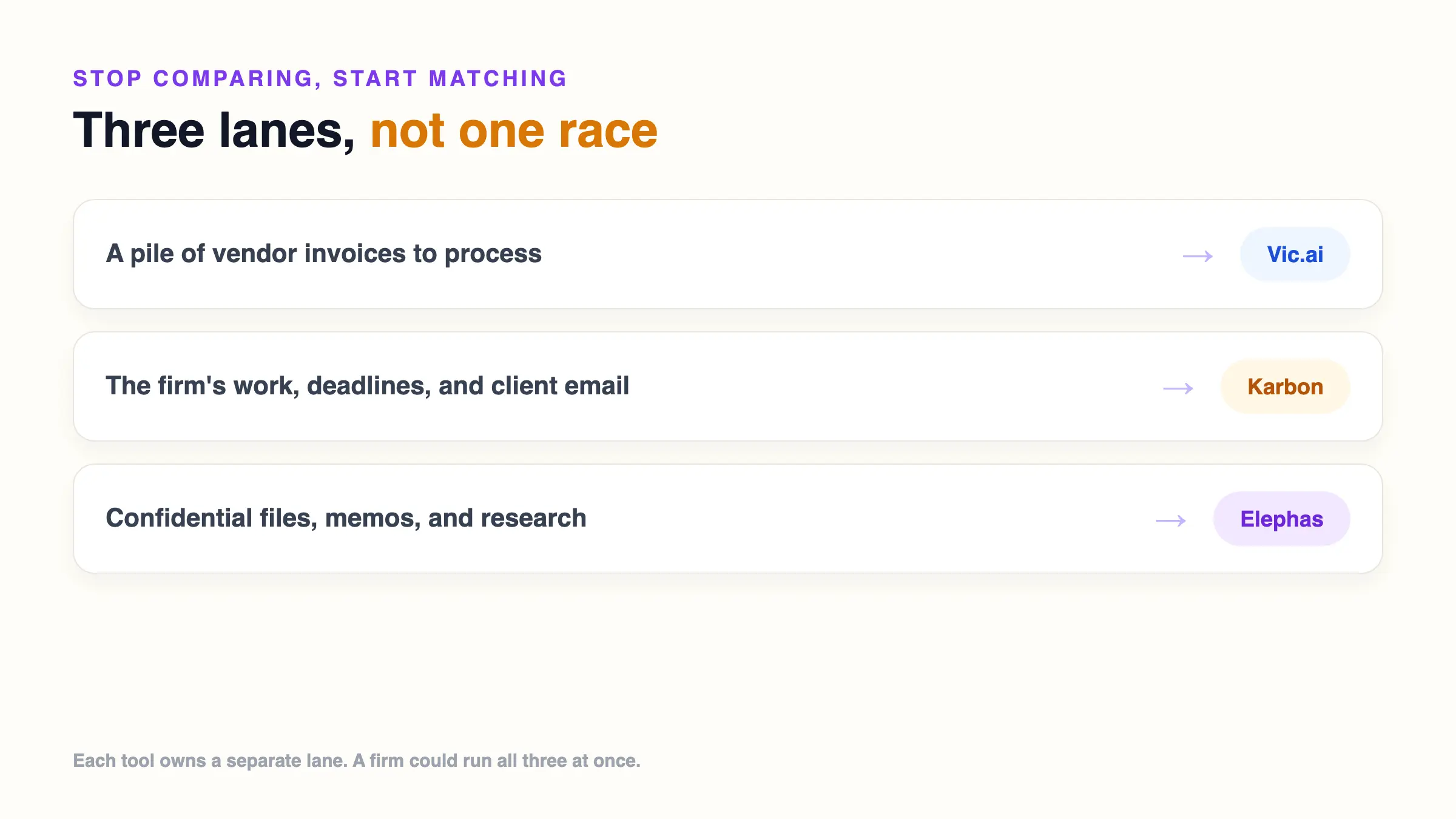
Picking between these three is like asking whether a delivery van, a filing cabinet, or a locked drawer is “better.” The answer depends on what you need to move, store, or protect. Each tool owns a separate lane.
Vic.ai is an accounts-payable engine. Karbon is practice-management software for the whole firm. Elephas is a private knowledge assistant for the confidential reading, drafting, and research a single accountant does every day. A growing firm could run all three at once and never feel a conflict.
This matters because the wrong purchase is expensive in two directions. You pay for a tool that does not fix your real bottleneck, and you still have the original problem.
So the useful question is not “which one wins.” It is “which job is bleeding time or risk right now.” Here are the three jobs, kept plain:
- Vic.ai's job: read thousands of vendor invoices, code them, match them to purchase orders, and push approvals through with almost no human touch.
- Karbon's job: run the firm's email, jobs, deadlines, time, and client communication in one shared place so nothing falls through.
- Elephas's job: let one professional chat with their own documents, draft a memo or a client letter, and research a question without sending client data to someone else's cloud.
How to tell which tool you actually need
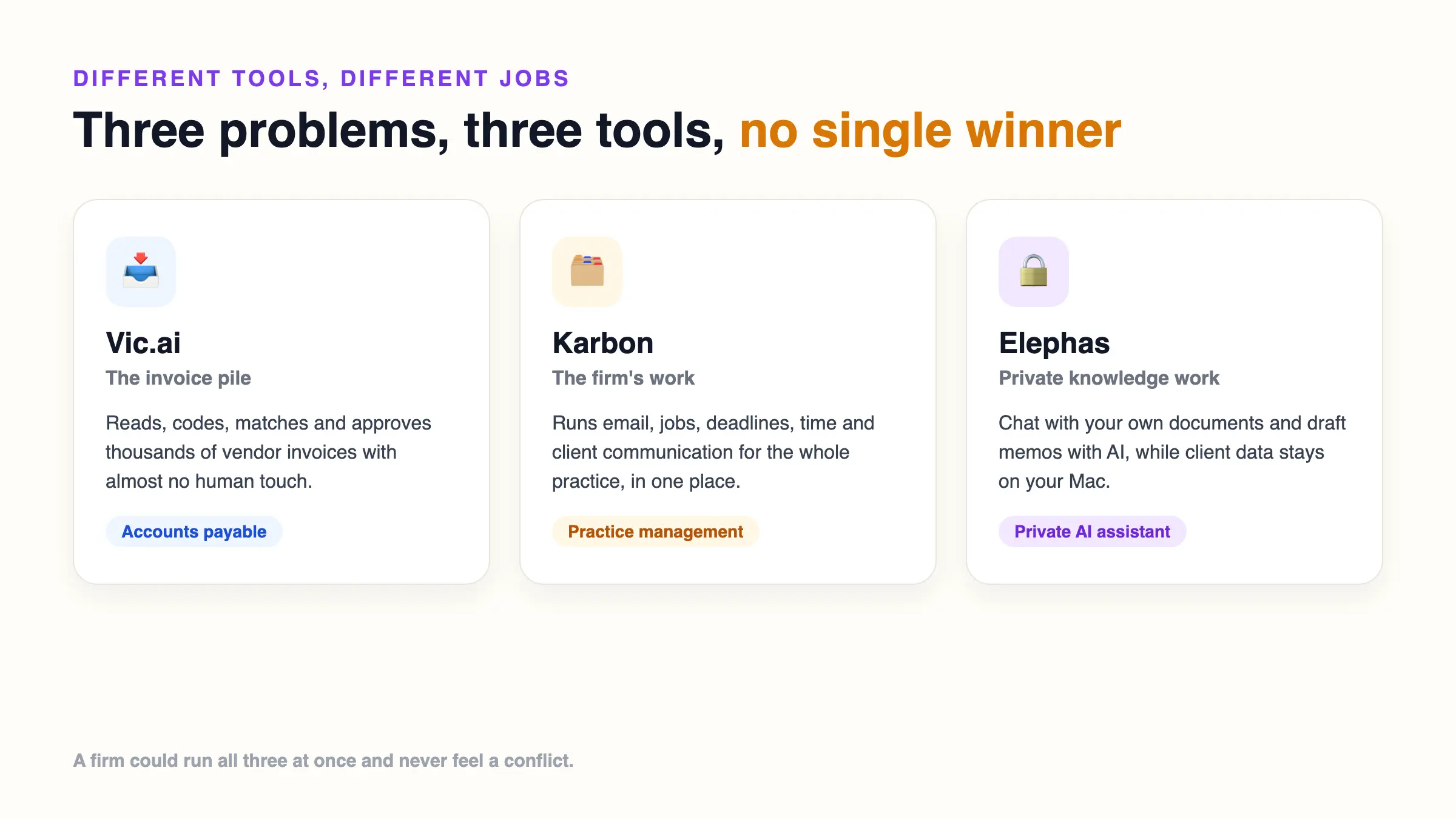
Before you compare features, name the job. Most buying mistakes happen because a firm liked a demo, not because they matched the tool to a problem. Three quick tests tell you which lane you are in:
- Volume. If your pain is a pile of vendor invoices that two people key in by hand all week, that is an accounts-payable problem, and it points at Vic.ai.
- Coordination. If work slips because email, tasks, and deadlines live in five different places, that is a workflow problem, and it points at Karbon.
- Confidentiality. If you want AI help with sensitive client files but cannot send Social Security numbers or financials to a public chatbot, that is a privacy problem, and it points at a local tool like Elephas.
Cost shapes the answer too. Vic.ai is quote-only and sales-led. One documented AWS Marketplace contract ran $25,000 for twelve months, and independent reviews put the break-even somewhere between roughly 500 and 1,000 invoices a month, with most pointing closer to 1,000. That alone rules it out for most small firms before features even matter.
The other two bill on completely different logic. Karbon charges per user, so its cost scales with your headcount. Elephas is consumer-priced per person, so a solo accountant or a whole team can each run it. They can all coexist because each solves a different problem inside the same firm.
- Vic.ai earns its keep at high invoice volume, ideally on NetSuite or Sage Intacct.
- Karbon charges per user, so the cost scales with your headcount, not your revenue.
- Elephas is consumer-priced with a free plan and paid plans from $19 a month, for individuals and teams alike.
- All three can coexist, because they bill differently and serve different buyers inside the same firm.
Vic.ai: autonomous accounts payable
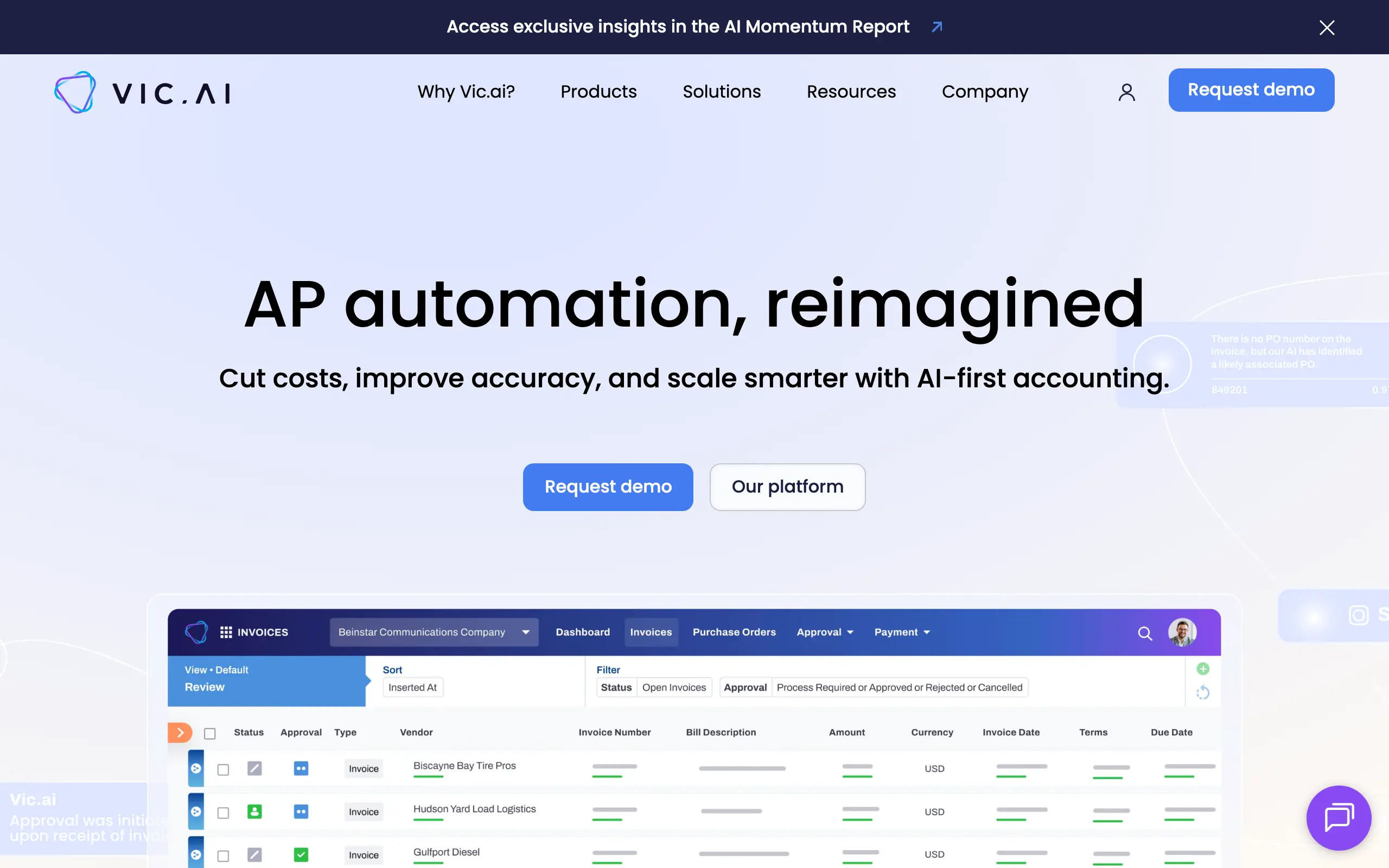
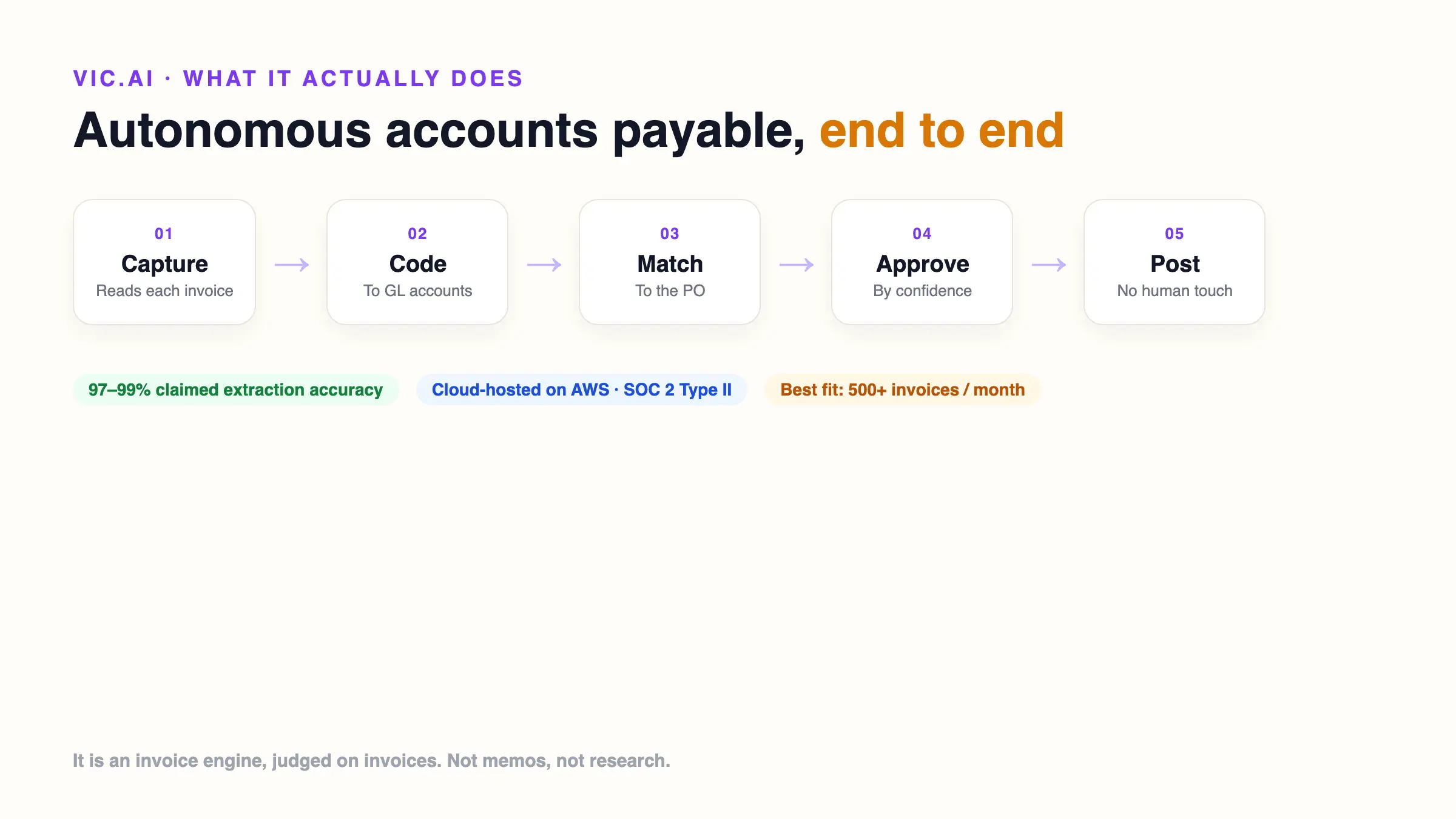
Vic.ai does one thing deeply. It ingests invoices from email, upload, EDI, or an API, reads the line items, codes them to the right general-ledger accounts, matches them to purchase orders, and routes approvals.
When its confidence score is high enough, it posts the invoice with no human touch. The company markets 97 to 99% accuracy on clean recurring invoices.
Here is what verified users say on the AWS Marketplace review wall, where every reviewer rated it five stars:
- Praise: one reviewer said Vic.ai “saves our firm a lot of time recording routine transactions,” and another that it “automates 95% of global invoices.”
- Praise: on the coding work itself, the AI “parses an invoice to provide all the necessary general ledger information,” which a team would otherwise key in by hand.
- Complaint: the same wall flags that “the parsing of an invoice is incorrect, requiring manual correction” on edge cases, and that it sometimes flags duplicate invoices that are not actually duplicates.
- Complaint: others wanted a direct vendor-payment screen and easier reporting.
Accountants on Reddit land in the same place: it is a serious AP engine, but a narrow one.
“Take a look at Vic.ai for AP automation. I just chose them over Ramp, Brex, Stampli, Tipalti, and others.”
View thread →“Bill.com sucks at inventory items. Vic.ai didn't even have that use case.”
View thread →None of those gaps is a research or writing weakness, because Vic.ai never claims to do that work. It is an invoice engine, judged on invoices, and on that job the verified voice is mostly happy.
- Best fit: mid-market and enterprise finance teams, plus large firms processing 500 or more invoices a month.
- Pricing: custom and quote-only, with no public price page and a 60 to 90 day procurement cycle.
- Data posture: cloud software hosted on AWS, with SOC 1 and SOC 2 Type II reports; there is no offline mode.
- What it is not: it is not an ERP, not practice management, and not a tool for memos, research, or client correspondence.
Karbon: the firm's operating system
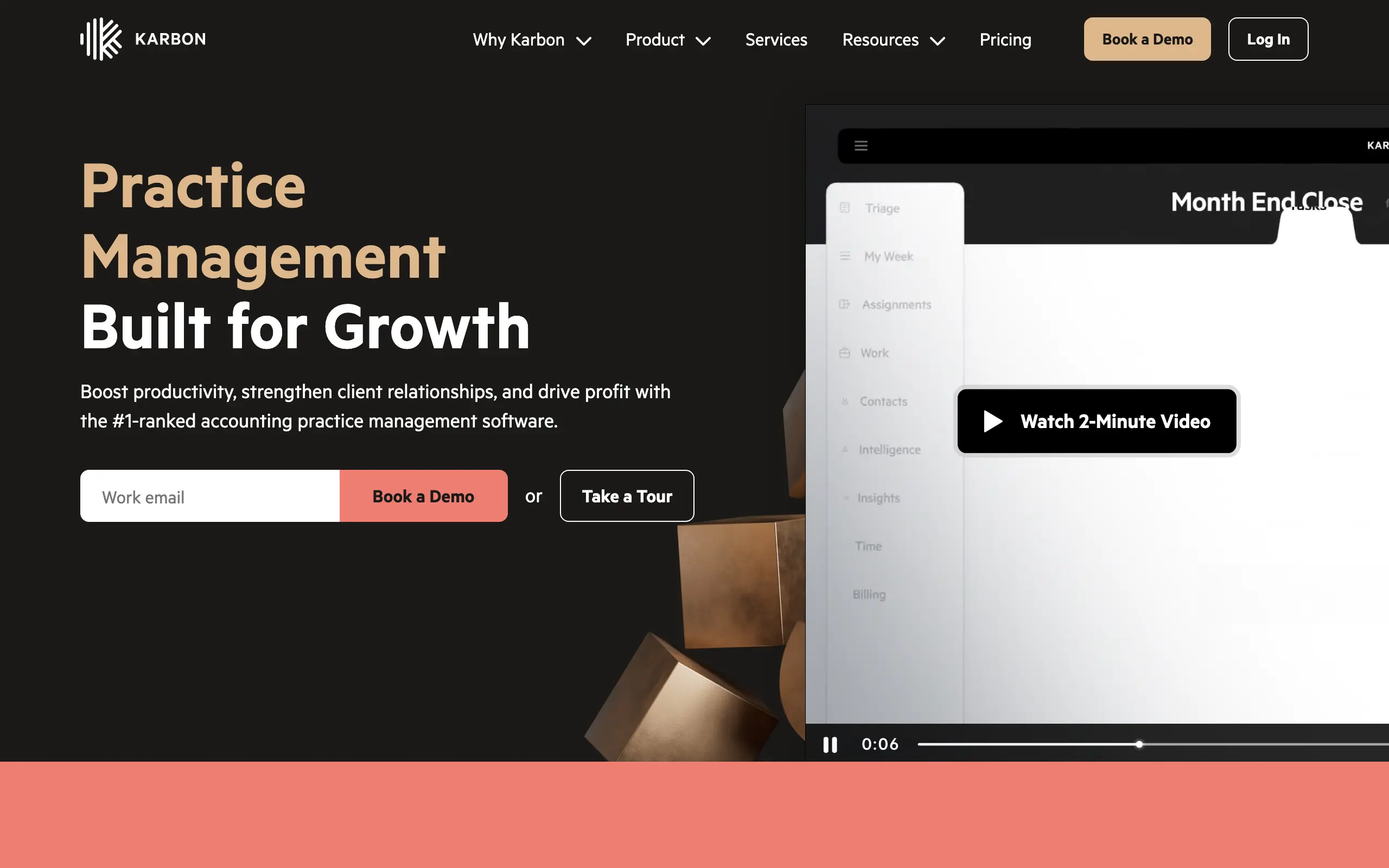
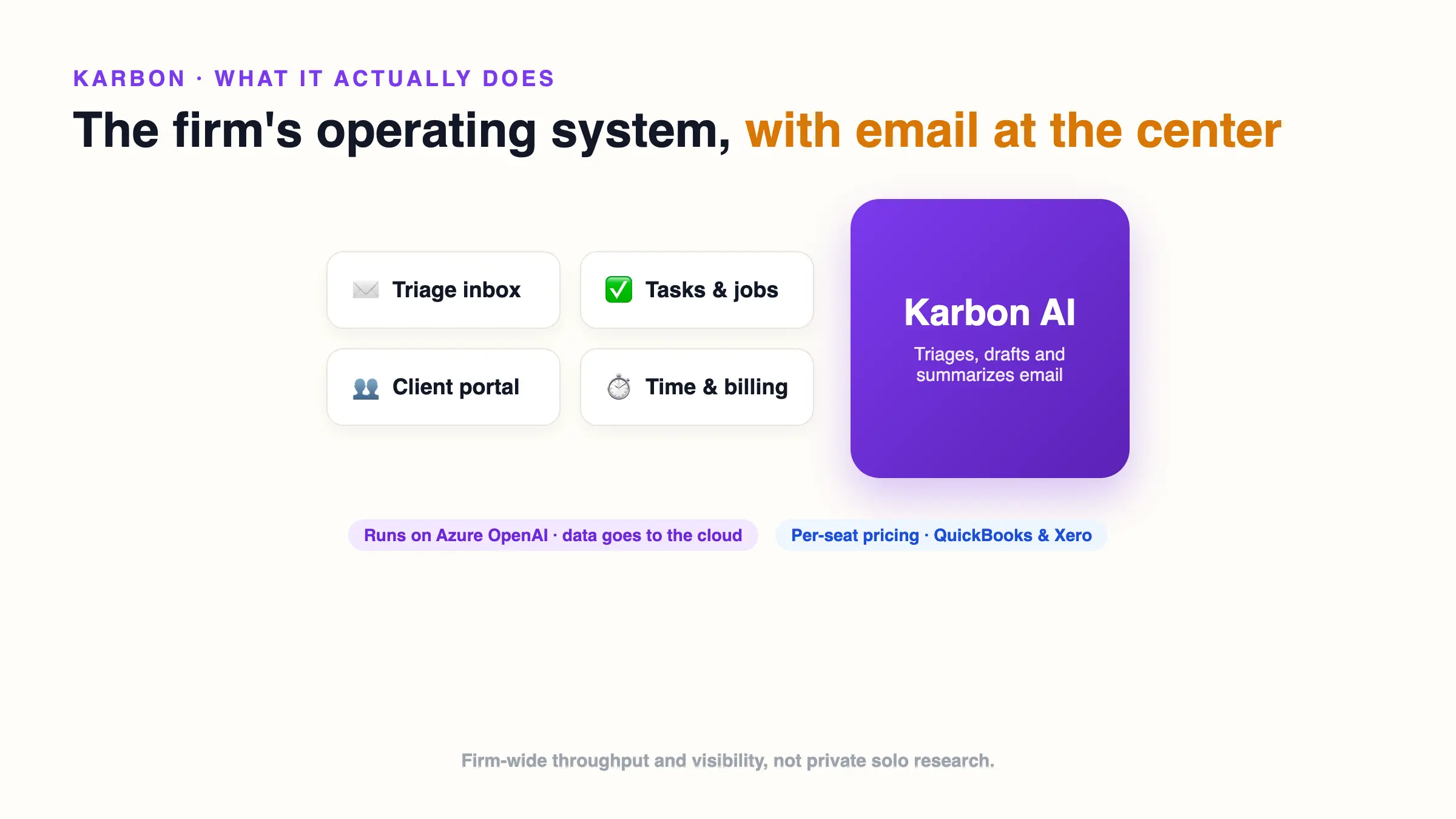
Karbon runs the firm, not the books. It pulls email, tasks, jobs, deadlines, time tracking, and client requests into one shared workspace, with a unified Triage inbox at the center.
Karbon AI sits on top of that and handles the email side. It triages messages by urgency, drafts and re-tones replies, and summarizes long work threads. The vendor has been clear since launch that Karbon AI focuses first on improving the email experience.
Here is the real user voice from Capterra and Software Advice:
- Praise: one Capterra reviewer called Karbon “easily the best email and workflow management system on the market,” and another said “Triage is awesome, workflow management keeps us on track and we always know where we are at.”
- Praise: on the AI itself, one user said Karbon's tools “assist with summarizing tax return results and integrating them into client emails.”
- Complaint: several dislike paying extra for basics, with one writing “I don't like that to do a bulk creation of jobs against clients that I have to pay extra,” and another flagging “the magnitude of the learning curve.”
- Complaint: bugs come up often, with one reviewer noting “there seems to be a lot of bugs still,” particularly around the Xero integration.
On Reddit, the same praise and the same gripes show up, sometimes bluntly:
“Karbon does Triage and Workflow amazingly well. I got ProConnect synced with it and Sharepoint.”
View thread →“Clear timelines, especially with open sharing. The mobile app is subpar.”
View thread →“Karbon is not at all built for a firm that has tax work. No real reporting or insights.”
View thread →The pattern is consistent. Firms praise the workflow and email visibility, then push back on per-seat pricing and a real learning curve. The win is firm-wide throughput, not solo research.
- Best fit: team-based accounting, tax, and bookkeeping firms that need shared workflow and client email in one place.
- Pricing: published and per user, billed monthly or annually across Team, Business, and Enterprise plans.
- Data posture: cloud software built on Azure OpenAI, so AI prompts and firm data are processed by a cloud model; there is no offline mode.
- What it is not: it is not invoice automation, not the general ledger, and not a private on-device assistant for confidential files.
Elephas: the private knowledge and memo lane
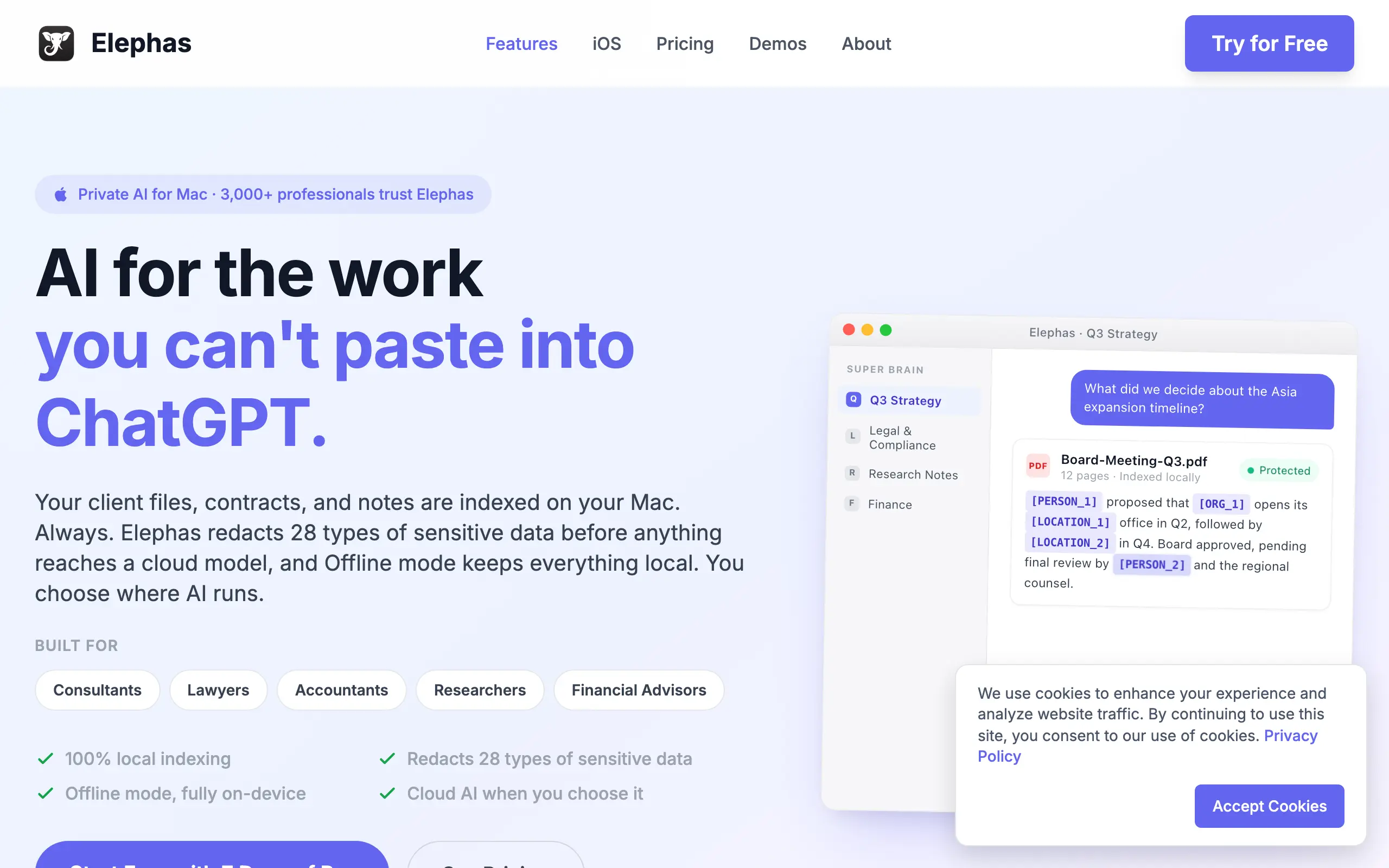
Elephas answers a need the other two never touch: getting one accountant AI help with sensitive client material without sending it to a public cloud. It is a privacy-friendly AI knowledge assistant for Mac.
You point it at your own documents, then chat with them, draft a memo or a client letter, or summarize a long file, with everything kept on your machine.
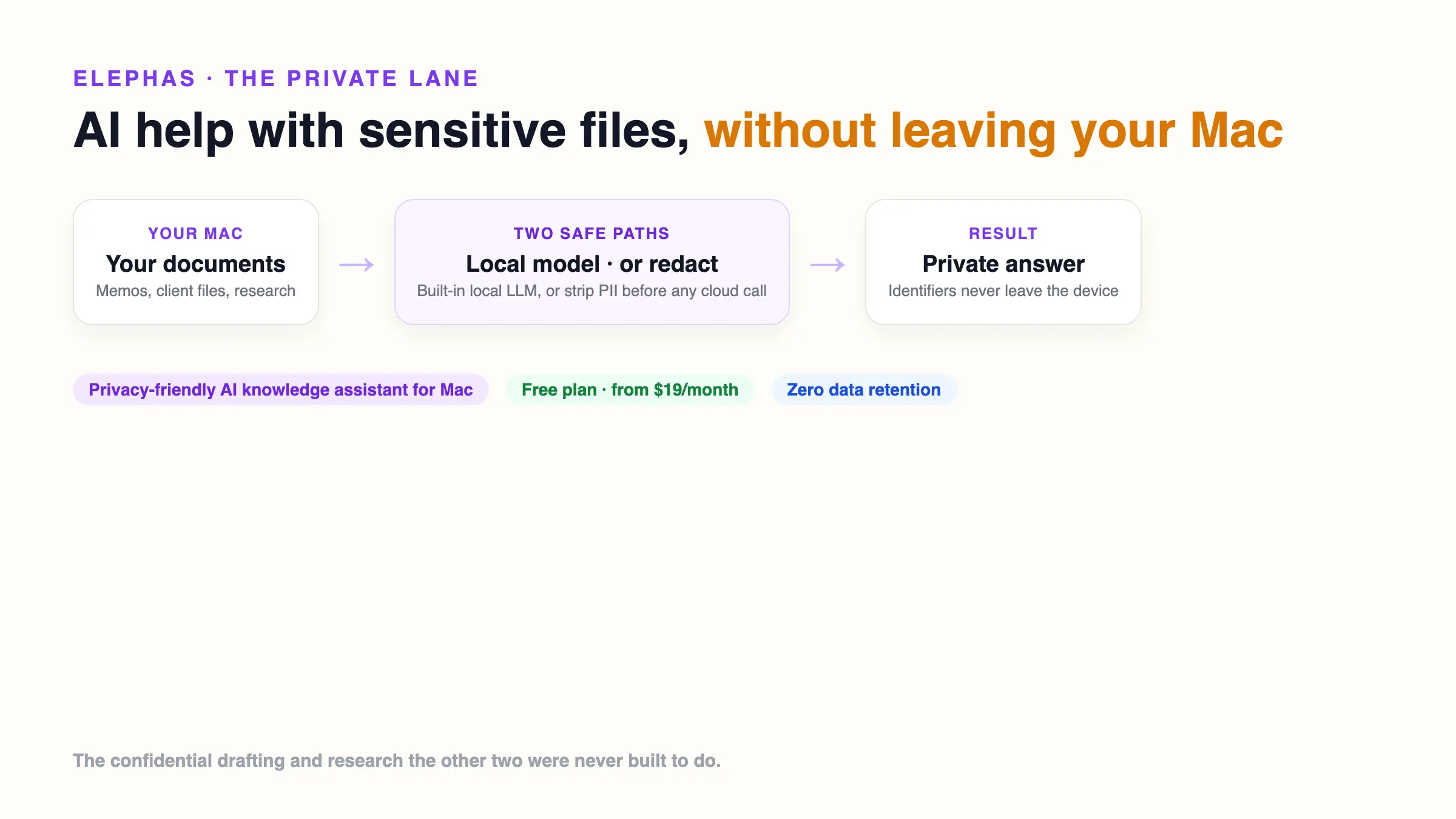
It does this two ways. It provides built-in local LLM models that run fully offline, so for the most confidential work nothing leaves your Mac. Or, when you want a leading cloud model, it adds automatic PII redaction.
For accountants who still want a leading cloud model, Elephas adds a second layer through automatic PII redaction. Before a prompt is sent to ChatGPT 5.5, Claude Opus 4.8, Gemini, Grok, Perplexity, or any other cloud model, Elephas strips sensitive names, emails, phone numbers, and identifiers on your Mac. The cloud model only ever sees the sanitized text.
When the answer comes back, the redacted fields are reassembled locally on your machine, so identifiable information never leaves the device. Elephas pairs this with zero data retention: content never trains AI models, never sits on a vendor's server, and never passes through a third-party reviewer's screen.
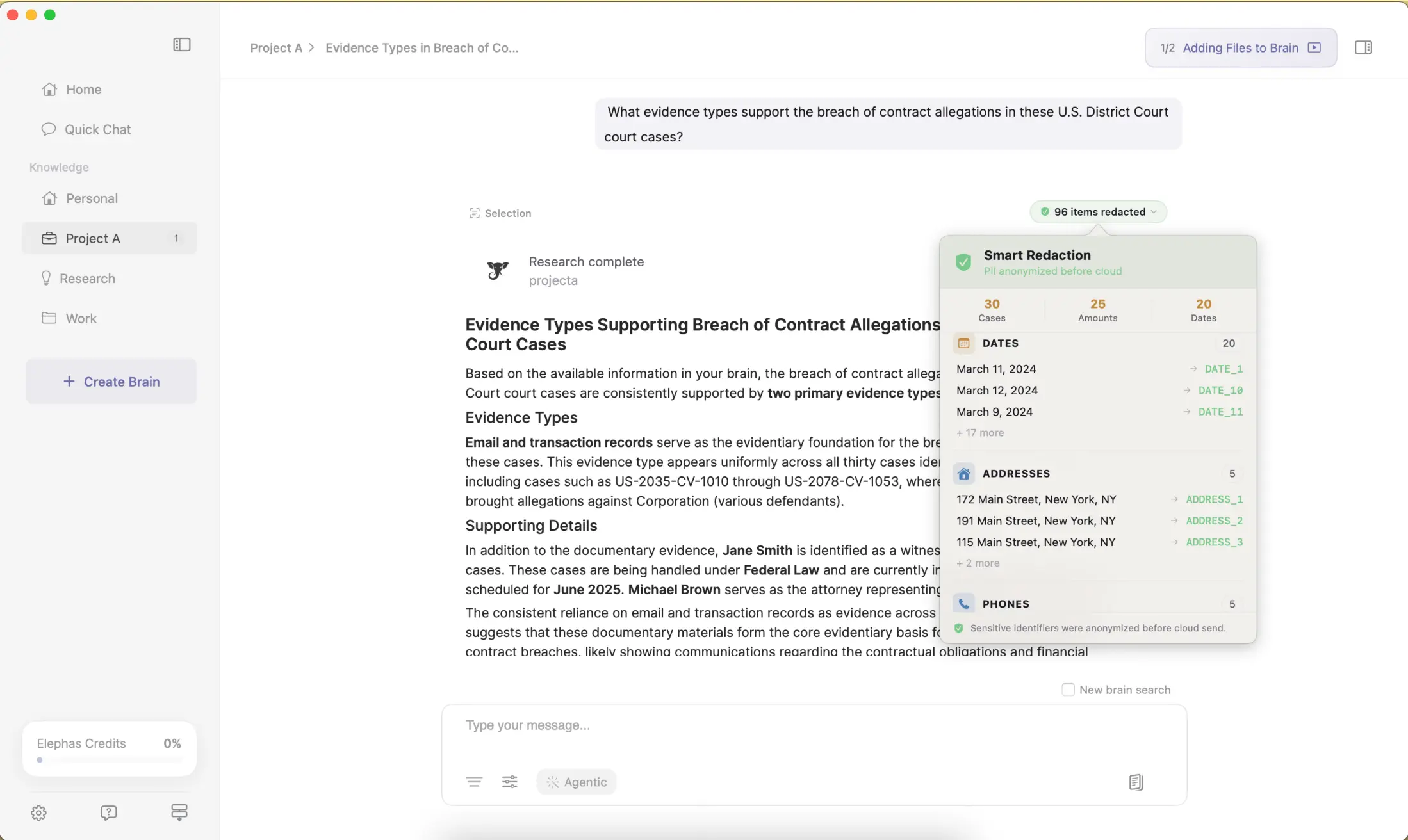
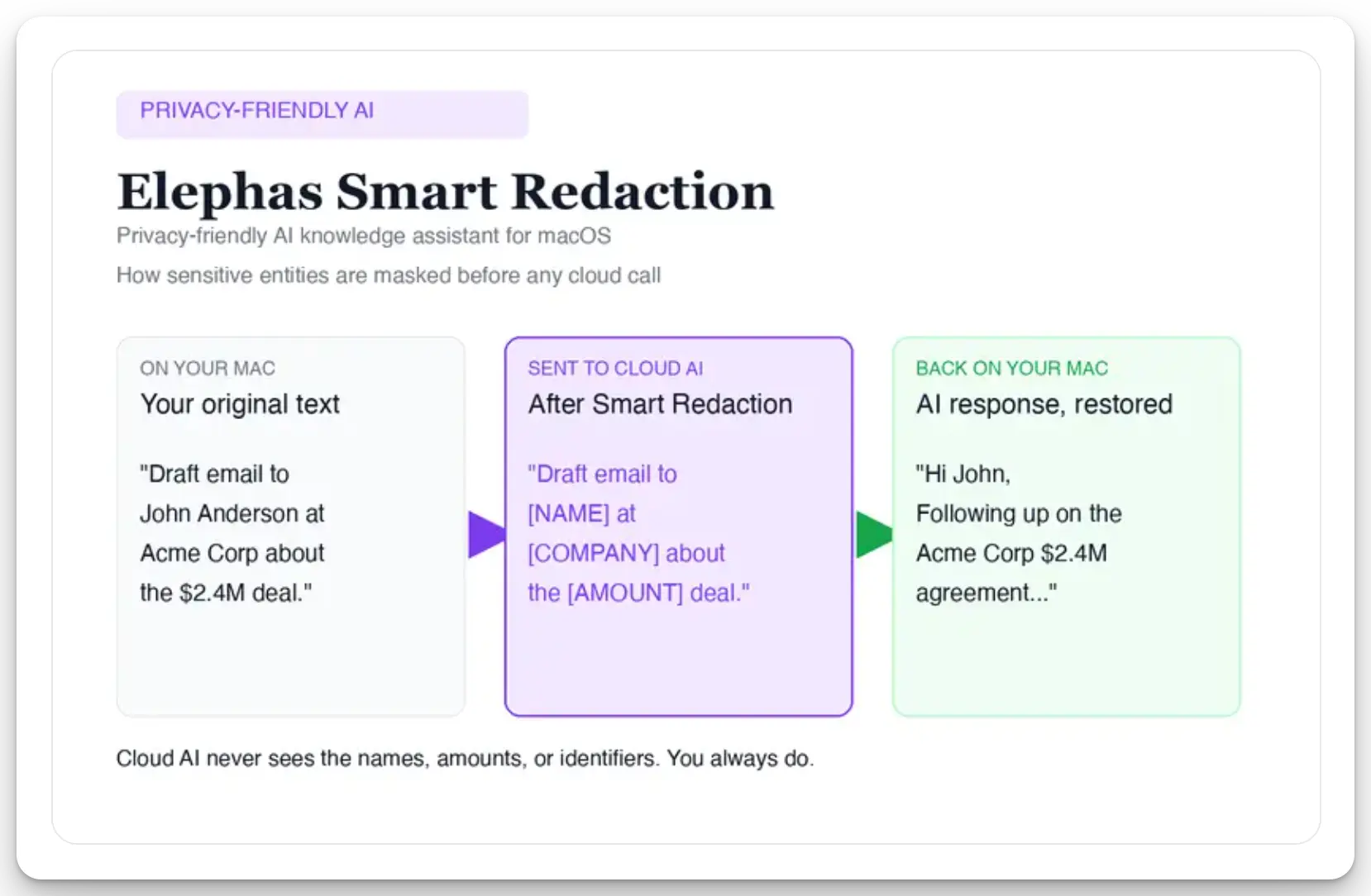
In the founder's words, sensitive data is automatically detected and redacted before anything reaches a cloud AI model, your content is never used to train AI models, and nothing passes through a third-party reviewer's screen.
That is the opposite default from Karbon AI, which runs on Azure OpenAI, and from Vic.ai, which processes every invoice in the AWS cloud.
Smart Redaction is available on every Elephas plan, including the free tier. Elephas has a free plan and paid plans from $19 a month; you can try Elephas for free and check the live plan list there.
- Best fit: an individual accountant or firm member who reads, drafts, and researches confidential client material and wants AI help without the leak.
- Pricing: free plan available, with paid plans from $19 a month; Smart Redaction is on every plan, including the free tier.
- Data posture: built-in local LLM models for fully offline work, or redact-before-send with local re-stitch and zero data retention for cloud models.
- What it is not: it is not an accounts-payable engine and not a firm-wide workflow board.
Head-to-head: three jobs side by side
| Vic.ai | Karbon | Elephas | |
|---|---|---|---|
| Core job | Process vendor invoices | Run firm workflow | Private knowledge work |
| Built for | Finance departments | The whole firm | Individuals and whole teams |
| Pricing model | Quote-only, sales-led | Per seat | Free plan, from $19/mo |
| What the AI does | Capture, code, match, approve | Triage and draft email | Chat with your own docs, draft, summarize |
| Where data goes | AWS cloud | Azure OpenAI cloud | Stays local, or redacts first |
| What it is NOT | Not memos or research | Not invoice automation | Not AP or practice management |
Lined up, the three tools barely overlap. The table above is less a scoreboard and more a map of which problem each one solves. Read down the “core job” row first, before any feature or price, and your own pick usually becomes obvious without a ranking at all.
The clearest split is data posture. Both Vic.ai and Karbon are cloud software by design, and Karbon AI sends content to Azure OpenAI to do its work. Our guide on local vs cloud AI covers when that gap matters.
Elephas is built around the opposite default, with a local model option and redaction before any cloud call. That is a privacy stance, not an AP feature or a workflow board, which is why it does not really belong in the same head-to-head as the other two.
- Core job: Vic.ai processes invoices, Karbon runs firm workflow, Elephas handles private knowledge work.
- Buyer: Vic.ai sells to the finance department, Karbon to the whole firm, and Elephas to any professional, whether solo or rolled out across a team.
- Pricing model: Vic.ai is quote-only, Karbon is per seat, Elephas is consumer-priced from $19 a month with a free plan.
- Where data goes: Vic.ai to AWS, Karbon AI to Azure OpenAI, Elephas stays local or redacts before any cloud call.
Which should you pick?
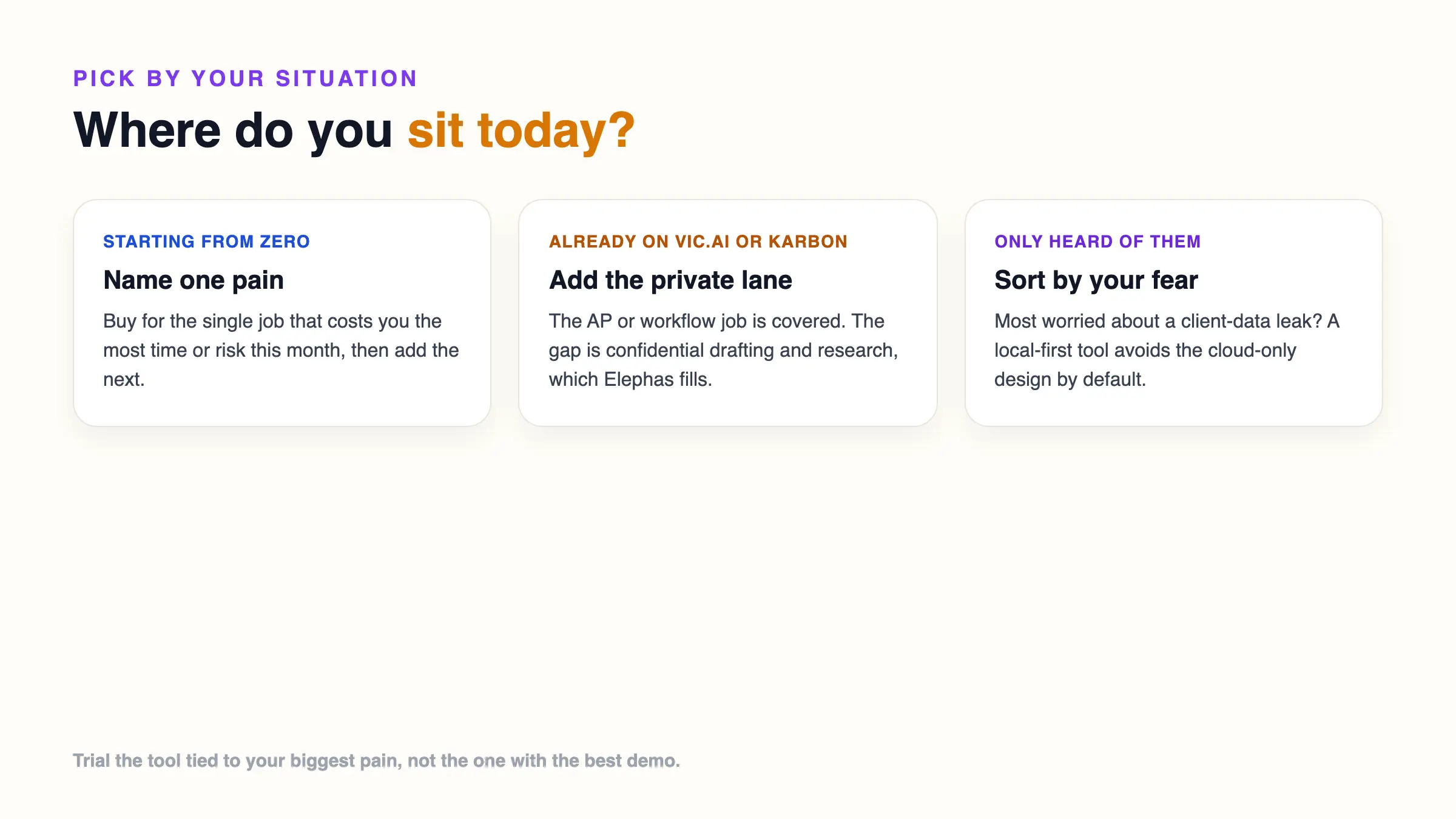
The right tool depends entirely on where you sit today. For the wider field, our best AI for accountants ranking scores ten tools on client-data handling. Here is the honest call for three common situations.
If you've never used any of these
If you are choosing from zero, do not buy all three on day one. Name your single loudest pain first. A wall of vendor invoices points to Vic.ai, but only if your volume clears its price floor; below roughly 500 to 1,000 invoices a month, independent reviews point you to lighter tools instead.
Scattered work and client email point to Karbon. Worry about pasting client data into ChatGPT points to Elephas. Start with the one job that costs you the most time or risk this month, prove it out, then add the next.
If you're already using Vic.ai or Karbon
If you already run Vic.ai or Karbon, the AP or workflow job is covered, and the gap is almost always the private knowledge lane. Vic.ai can mis-flag duplicate invoices on edge cases; Karbon users report “a lot of bugs still” around Xero, and Karbon AI ships every prompt to Azure OpenAI.
Neither lets you research your own confidential files offline, and neither was built to draft a sensitive memo locally. That is the wedge: keep your current tool, and add Elephas for the private drafting and research the other two skip.
If you've heard of these but never tried them
If you only know these by name, sort by the risk you most want to avoid. If your worst case is a data leak from confidential client work, the cloud-only design of Vic.ai and Karbon AI is the thing to weigh, and a local-first tool like Elephas avoids it by default.
If your worst case is a busy season buried in invoices or missed deadlines, then Vic.ai or Karbon is worth the trial, with Elephas alongside for the private work. Trial the one tied to your biggest fear, not the one with the best demo.
The verdict: you might run all three
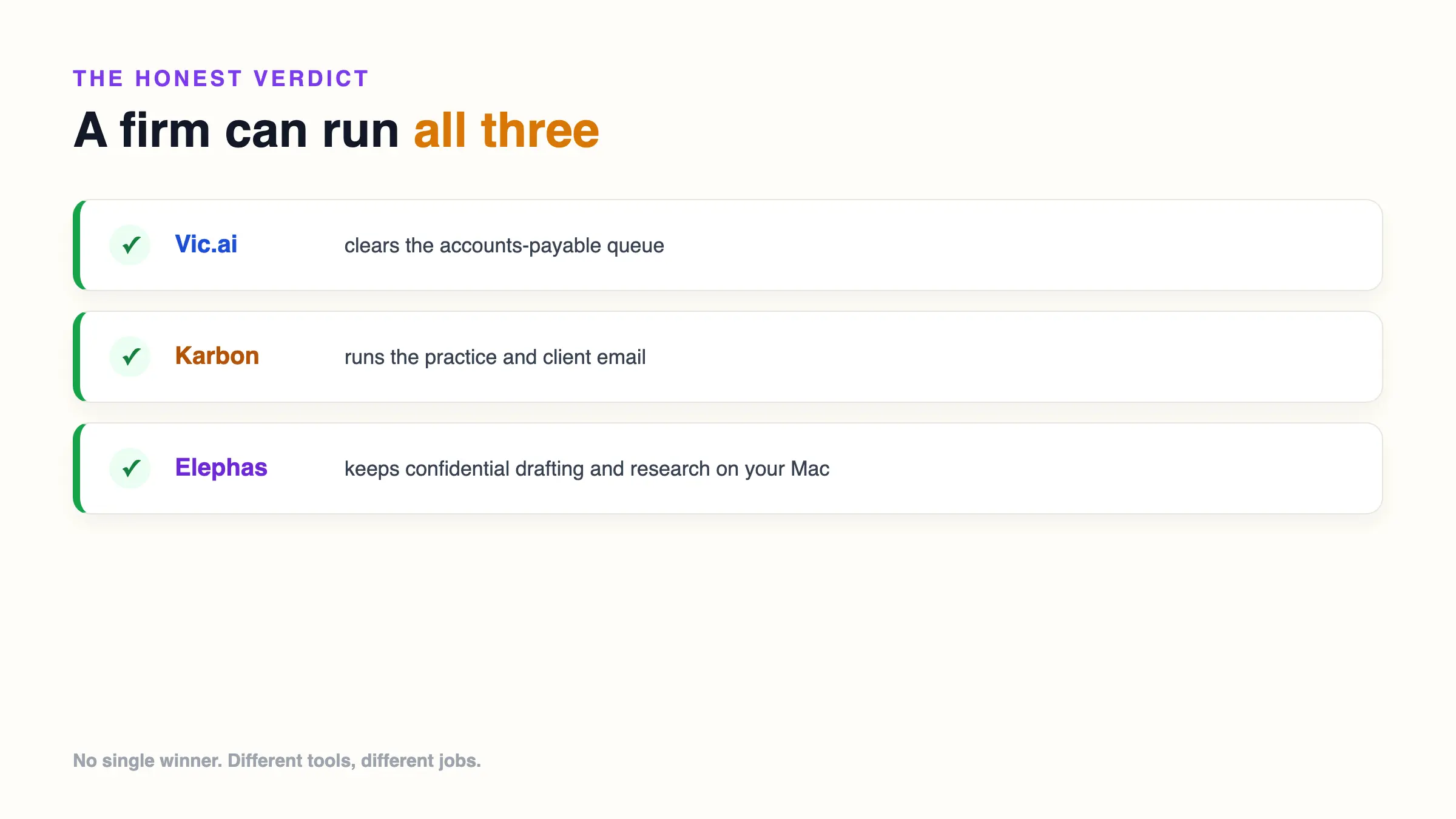
There is no winner here, and any article that names one is selling you something. Vic.ai clearly wins on autonomous accounts payable. If your pain is a high-volume invoice queue on NetSuite or Sage Intacct, nothing on this list beats it.
Karbon wins on firm-wide workflow and client email. If work slips between staff, it is the right call. Each tool is the best pick for its own job, which is exactly why a head-to-head ranking misleads more than it helps.
Elephas wins the job the other two leave wide open: private, on-device AI for the confidential reading, drafting, and research a single accountant does daily.
A firm could reasonably run Vic.ai to clear the AP queue, Karbon to run the practice, and Elephas for the work that should never leave the device. Different tools, different jobs.
- Match the tool to the job: invoices to Vic.ai, firm workflow to Karbon, private knowledge work to Elephas.
- Cost scales differently for each, by volume, by seat, and by individual, so the cheapest tool is the one aimed at your actual buyer.
- Both Vic.ai and Karbon are cloud by design, so weigh where client data goes before you commit.
- For the confidential drafting and research the other two skip, Elephas is the privacy-friendly AI knowledge assistant we recommend, with built-in local LLM models so client data never leaves your Mac.
Frequently asked questions
Is Vic.ai, Karbon, or Elephas the best for accountants?
None of them, because they do three different jobs. Vic.ai automates accounts payable, Karbon runs a firm's workflow and client email, and Elephas is a private AI knowledge assistant for drafting memos and researching your own documents. The right pick depends on which job is costing you the most time or risk.
How much does Vic.ai cost?
Vic.ai does not publish prices. It is quote-only and sales-led. One documented AWS Marketplace contract ran $25,000 for twelve months, and independent reviews put the break-even somewhere between roughly 500 and 1,000 invoices a month, so it is generally too expensive for small firms.
Does Karbon AI send my client data to the cloud?
Yes. Karbon AI is built on the Azure OpenAI Service, so prompts and firm data are processed by a cloud model. Karbon states the data is not used to train models and stays in-region, but there is no on-device or offline option.
What does Elephas do that Vic.ai and Karbon do not?
Elephas handles the private knowledge lane: chatting with your own documents, drafting a memo or client letter, and summarizing files, with the option to keep everything on your Mac.
It provides built-in local LLM models that run fully offline, or it strips sensitive identifiers before any cloud call. It has a free plan and paid plans from $19 a month.
Keep client work private
Elephas gives you AI help with memos and research without sending client data to a cloud, with built-in local LLM models for when nothing should leave your Mac.
Try Elephas for free